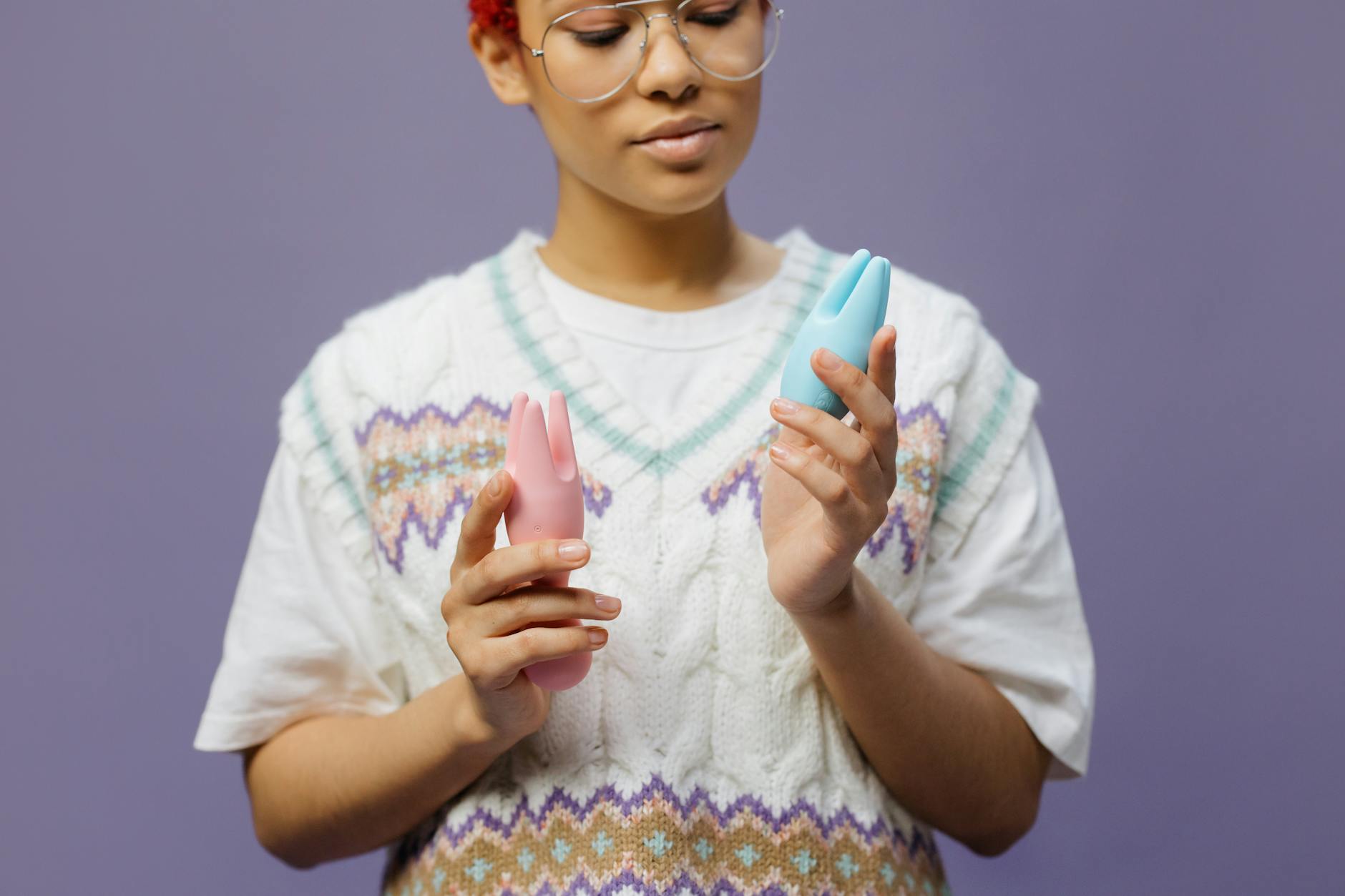
Here's the thing about recovery without a timeline
Someone tells you when you get a cast off, you're healed. Someone tells you six weeks after surgery, you're cleared for activity. But recovery from medical trauma, illness, or relationship upheaval doesn't usually come with an expiration date. You wake up some mornings not knowing what your body can handle. You feel fine on Tuesday and need two days to recover from Friday. And when it comes to pleasure and sexuality, that uncertainty becomes its own layer of complication.
Many people I work with describe this exact limbo: wanting to reconnect with sensation and arousal, but not knowing if today is a "yes" day or a "no" day. The temptation is to wait until everything is clear. But actually, clarity often comes from gentle, curious exploration. That's where a lemon clitoral vibrator changes things.
Why uncertainty makes pleasure feel impossible
Recovery without a timeline creates what I call "pleasure paradox." You want to feel sexual again. But pleasure requires presence, and presence feels risky when your body doesn't feel stable. Your nervous system is stuck between "maybe I can" and "maybe I can't," and that tension kills arousal faster than anything.
Add to that the practical frustration: you don't know whether to aim for partnered sex, solo exploration, or nothing at all. You can't plan. You can't promise your partner anything. And if healing takes longer than you expected, you start internalizing the delay as personal failure instead of what it actually is. A variable recovery process.
The lemon adult toys category, especially suction-based designs like the Lem, work beautifully here because they require almost zero commitment. You're not setting aside an hour. You're not promising an orgasm. You're not performing recovery. You're just checking in with your body for five or ten minutes and seeing what's available today.
The permission structure you actually need
Here's what most recovery guides get wrong: they treat pleasure like a treatment goal. "By week eight, you should be able to..." That framing works for walking after an injury. It doesn't work for sexuality, especially when your timeline is unclear.
Instead, flip the structure. Your actual goal isn't an orgasm by a certain date. It's permission to be curious without pressure. That's the foundation everything else builds on.
So before you touch a lemon vibrator, you need this conversation with yourself: I'm exploring pleasure today because it interests me, not because I should. I'm not trying to prove anything. If this feels good for three minutes and then I want to stop, that's a complete success. If today feels like a no-day, that doesn't mean tomorrow will be, and it definitely doesn't mean I'm broken.
Write that down if you need to. Seriously. The permission structure is half the battle.
Starting with solo time, no expectations
When your timeline is unclear, partnered exploration adds complexity you don't need yet. Solo time lets you gather data about your own capacity without the variable of another person's energy or expectation.
Here's how to start:
Day one: Hold the lemon vibrator. Just hold it. Notice the weight, the temperature, the texture. You're not turning it on. You're not using it. You're checking in with yourself: does this object feel okay in my hand? Can I hold it without anxiety spiking? That's enough.
Day two or three: Turn it on at the lowest setting while you're doing something else. Reading, watching TV, lying in bed awake. Not with the goal of arousal. Just acclimatizing your body to the sensation and the sound. Many people find that a lemon clitoral vibrator's gentle suction pattern feels less jarring than traditional vibration, which matters when your nervous system is already managing a lot.
When you're ready: Combine the tool with your own touch. Use the Lem on low while you're stroking your thigh, your chest, anywhere that feels safe. You're layering sensation, not hunting for orgasm. Your body will tell you if arousal is available. Often it is, even when you're skeptical.
The key is that nothing in this timeline is promised. You're listening, not achieving.
Why the lemon sucker design works for uncertain bodies
There are reasons I specifically recommend air-suction lemon vibrators for people navigating unclear recovery. The mechanics matter.
Traditional vibrators send repetitive micro-movements through tissue. If your body is tender, inflamed, or just hypersensitive from stress, that constant buzz can feel overwhelming or even painful. A lemon clitoral vibrator works differently. It creates a gentle seal and rhythmic suction, which stimulates nerve endings without the same mechanical friction. Your tissues don't feel assaulted. Your nervous system doesn't interpret the sensation as urgent. It's more like a slow conversation with your body.
The other advantage: you control the intensity by adjusting the seal. If a particular pattern feels too much, you can shift slightly and dial it down instantly. That sense of control matters enormously when your healing trajectory is already unpredictable. You're back in charge of your own sensation.
Talking to a partner about this, if that's in the picture
If you have a partner, this is where communication gets real. They want to know when you'll be ready. You can't promise them a date. That doesn't mean you give them nothing.
Instead, share the framework: I'm exploring pleasure in small ways right now. It's not about performance or proving anything. Some days my body feels more open than others, and I need to respect that without shame. If you want to be part of this process, here's what helps. What doesn't help.
Many partners are actually relieved to hear this. It means they're not waiting for a yes that may never arrive on schedule. They're supporting a process instead. How to Use a Lemon Vibrator With a Partner Who Has Performance Anxiety covers this deeper if you need language for those conversations.
If your partner resists the idea of solo exploration with a toy, that's information too. How to Use a Lemon Vibrator When Your Partner Doesn't Want Toys Involved walks through that separately.
Building an actual recovery practice, not a deadline
Here's what I've seen work best for people whose healing doesn't follow a script: turning exploration into a micro-practice instead of a goal.
Two or three times a week, you give yourself 10 minutes. Not "until you orgasm." Not "until you feel better." Just 10 minutes where you check in with the lemon vibrator and notice what's available. Some sessions will be arousing. Some will feel flat. Both are data. Over time, patterns emerge. You'll notice your body feels more open on certain days. You'll see that rest actually matters. You'll realize that pleasure doesn't have to mean orgasm.
That's when recovery becomes less about hitting a milestone and more about rebuilding trust with your own body.
When to bring in professional support
If pain appears during exploration, stop. Don't push through. That's not bravery, it's re-traumatization. Same if arousal feels completely inaccessible for months, or if exploring pleasure triggers panic or dissociation. Those are signs you need support from a therapist who specializes in somatic healing or trauma. A lemon vibrator is a tool for exploration, not a substitute for professional care.
Similarly, if you notice you're using the vibrator to escape emotional processing instead of explore pleasure, that's worth examining. The difference is roughly this: exploration feels curious. Escape feels desperate. Know the difference.
Recovery without a clear timeline is genuinely hard. You don't get the luxury of certainty. But you do get something else. You get to rebuild pleasure on your own terms, without anyone else's timeline imposed on it. That autonomy, once you lean into it, is its own form of healing.
Frequently asked questions
How often should I use a lemon vibrator if I'm still recovering?
There's no magic number. Some people benefit from two or three times weekly. Others prefer once weekly. What matters is consistency without pressure. If you notice that using it more often feels like obligation rather than pleasure, scale back. If using it less frequently means you lose momentum, increase it. Your body knows.
Can I use a lemon clitoral vibrator if I'm not sure whether I can have orgasms right now?
Yes, absolutely. Actually, I'd argue that exploring sensation without the goal of orgasm is exactly where you should start. Orgasms may or may not be available depending on where you are in recovery. But sensation, curiosity, and gentle arousal usually are. Separate those from the outcome and you'll have a much better time.
What if using a lemon vibrator brings up emotional stuff, like grief or anger?
That's more common than you'd think, especially when you're reconnecting with pleasure after a break. Your body holds a lot. When you tune back in, things come up. It doesn't mean you're doing it wrong. If it's manageable, you can sit with it. If it feels overwhelming, pause and journal or talk to someone. Pleasure and emotion aren't separate. They're intertwined.
Is it normal to feel nothing at first?
Completely normal. Trauma, illness, stress, and disconnection can numb sensation. Your body might need time to remember how to feel. Using a lemon sucker on low intensity, with zero expectation, is actually the gentlest way to wake that up. Don't rush it.
Should I explore with a partner present, or alone?
Start alone, always. You need to gather data about what feels good without anyone else's energy in the room. Once you know your own baseline, adding a partner becomes a choice, not a mystery. Many people find that solo practice first makes partnered exploration feel less pressured.
What if my recovery timeline ends up being much longer than expected?
That changes the context, but not the practice. If you're in recovery for months or years, thinking in terms of "exploring pleasure as part of my healing process" rather than "waiting until I can have normal sex" keeps you from putting your entire sexuality on pause. A lemon vibrator becomes part of your daily care routine, like stretching or breathing exercises. It's not a sign you're failing. It's a sign you're maintaining connection to yourself during a long process.
Recovery without clarity is uncomfortable. It requires patience with yourself that you probably haven't had to practice before. But it also means you get to define what pleasure looks like without external pressure. That's rare. Protect it. Your lemon clitoral vibrator is just a tool to help you explore what's actually there, underneath the uncertainty.