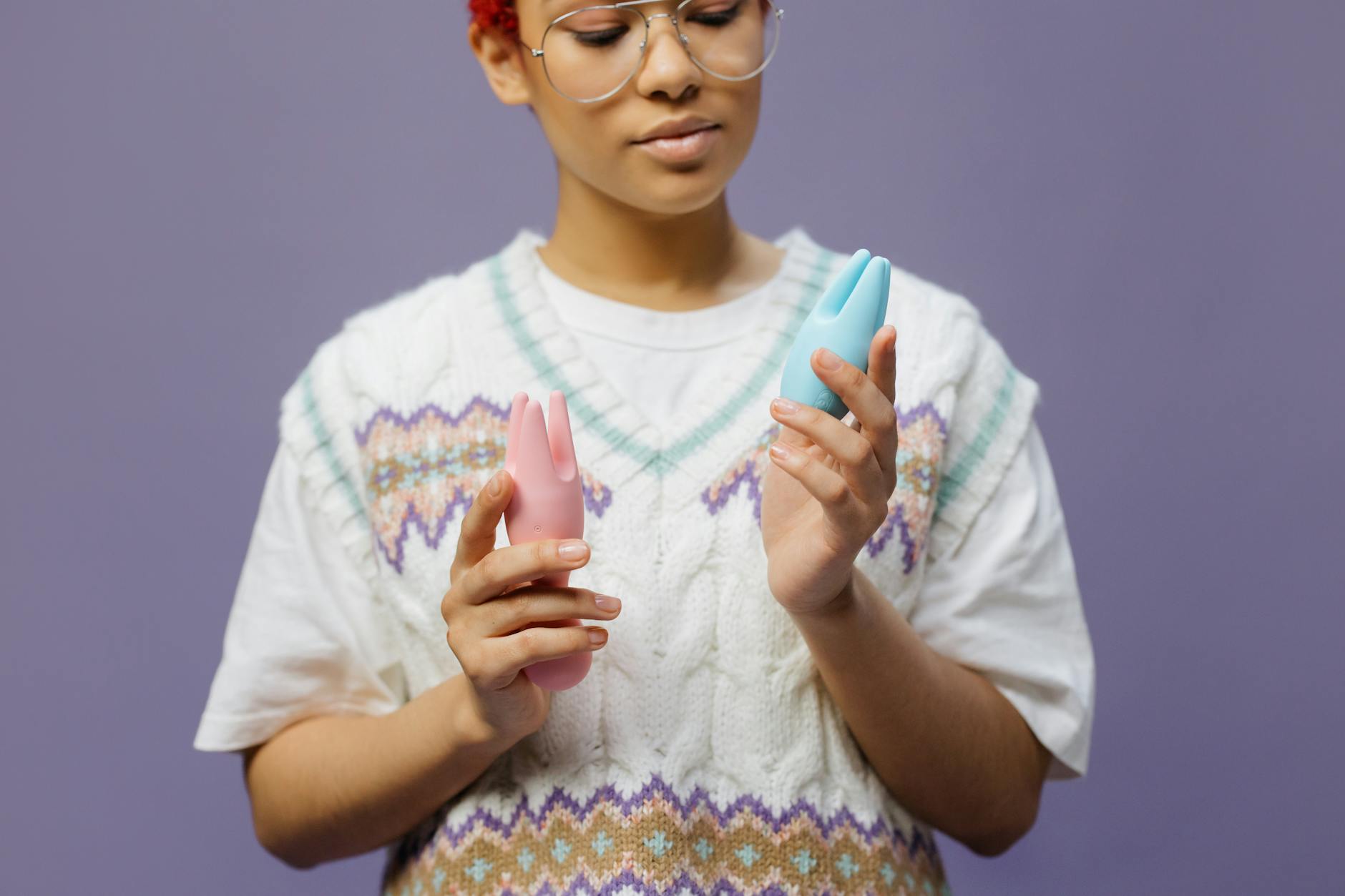
Here's the real difference
A traditional vibrator moves back and forth really fast. A lemon clitoral vibrator, also called a lemon sucker or air-pulse toy, creates rhythmic suction and release instead. That sounds like a small distinction. It's not. The sensation is genuinely different, the nerve pathways it activates are different, and the orgasms it produces often feel totally different too.
I'm going to walk you through exactly how both work, why someone might prefer one over the other, and what research actually tells us about which feels better. Spoiler: it depends entirely on your body and what your nervous system responds to.
How traditional vibration actually works
A standard vibrator uses a motor with an eccentric weight. The weight spins off-center, creating rapid oscillation side to side or up and down. That vibration travels through the silicone or plastic into your tissues, stimulating nerve endings across a broad area.
The sensation is direct. It's consistent. It builds momentum. Many people find it predictable and easy to orgasm with, especially if they've used vibrators for years. Your body knows what to expect.
The intensity is also straightforward to increase. More voltage, faster vibrations, deeper sensation.
How air-pulse technology actually works
Lemon clitoral vibrators use a completely different mechanism. Instead of vibration, they create little pulses of air and suction. A motor pulls air out of a small chamber over your clitoris, then releases it. This creates a gentle sucking sensation that mimics the feeling of oral sex without the tongue friction.
Why this matters: suction doesn't scatter stimulation across a wide area the way vibration does. It concentrates sensation right where you want it, like someone gently pulling a vacuum over the most sensitive tissue. The clitoris itself can actually move slightly inside the hood with air-pulse stimulation, which you don't get with vibration.
This focused intensity is why people often describe lemon sucker orgasms as more intense, more localized, and sometimes faster to achieve.
The sensation difference explained
Imagine the difference between someone drumming on your arm versus someone gently sucking on your earlobe. Both create stimulation. One spreads across tissue, one concentrates on a specific point. Neither is better. They just activate different nerve endings and brain pathways.
Traditional vibration tends to feel more like humming through your entire genital area. Air-pulse feels more like focused pulling on the clitoris itself.
Traditional vibrators often work well for penetrative play too, since the vibration travels inward. Lemon clitoral vibrators are almost exclusively external, clitoral-focused toys.
Why timing matters for your nervous system
Here's something most people don't know: the rhythm of stimulation changes how quickly you can orgasm and how intense it feels.
Many traditional vibrators run at about 7000 to 12000 oscillations per minute. They're fast and consistent. Your body learns to sync with that rhythm.
Most air-pulse vibrators run much slower, around 1000 to 3000 pulses per minute. This slower rhythm actually mimics how hands or mouths move during real sex more closely. Your nervous system recognizes it as "natural" stimulation, which can make the orgasm feel more genuine and less mechanical.
That's also why people with sensitive vulvas or clitorises often gravitate toward air-pulse toys. The slower pulse feels less jarring on delicate tissue.
Sensitivity and comfort factors
One of the biggest reasons someone might choose a lemon vibrator over traditional options is tissue sensitivity. If your clitoris feels sore or numb after a few minutes with a standard vibrator, it might not be a preference issue. It might be that your nerve endings are reacting to the constant high-frequency stimulation.
Air-pulse stimulation at lower frequencies is often gentler on sensitive tissue. The suction itself also feels wetter and more natural because it mimics the tongue action you get during oral sex.
People who are recovering from vulvovaginal atrophy, post-surgical sensitivity, or even just natural age-related changes often find that a lemon clitoral vibrator feels more comfortable than a traditional vibrator.
What the research actually shows
Studies comparing air-pulse to vibration orgasms are still pretty limited, but what exists is encouraging. One small study published in Sexual Medicine Reviews found that air-pulse stimulation produced orgasms in 92% of participants who hadn't been able to orgasm with traditional vibrators.
Another consistent finding: women report that air-pulse orgasms feel different, often described as deeper or more localized. Whether that's objectively different or just how the nervous system interprets focused suction versus scattered vibration isn't entirely clear. But from a pleasure perspective, different is often better than familiar.
The real question: which should you actually try
If you've never used a vibrator before, how to use lemon vibrators without pain is a good starting point. But whether you start with air-pulse or vibration depends on a few things.
Try air-pulse if you have sensitive tissue, you've had trouble orgasming with traditional vibrators, or you want something that mimics oral sex more closely.
Try traditional vibration if you want broad, consistent stimulation, you plan to use it internally or with a partner, or you're looking for a more affordable entry point.
Honestly, your best move is to try both. Bodies are different. One person's perfect toy is another person's "meh." What matters is what your nervous system actually responds to, not what the internet told you to buy.
Combining both into partnered sex
Here's something I notice a lot of couples doing: using an air-pulse toy solo first to discover what intensity and rhythm feels best, then introducing a partner to that sensation. You're not asking them to replicate it exactly. You're showing them what patterns actually make your body light up.
If you're curious about weaving a lemon vibrator into partnered play without the awkwardness, integrating lemon vibrators into partnered sex covers that in detail.
Why "better" is a trap
Neither vibration nor air-pulse is objectively better. Your clitoris has about 8000 nerve endings. Different types of stimulation activate different groups of them. A slow air-pulse might activate the deep nerves responsible for full-body orgasms. A fast vibration might trigger the surface nerves that create quick, sharp pleasure.
Your job isn't to find the "correct" toy. Your job is to figure out what actually works for your body, your timeline, and what you're in the mood for on any given day.
Some days you want focused intensity. Some days you want broad, humming sensation. Both are valid. Both deserve space in your pleasure toolbox.
The comfort conversation with partners
When you're talking to a partner about trying something new, the difference between vibration and air-pulse can actually matter for the conversation. "I want to try this toy" is one thing. "I want to try this toy because I find concentrated suction feels more natural and intense for my body" tells them something useful.
That specificity also helps you understand what you're choosing and why. You're not just buying a vibrator. You're choosing a type of stimulation that matches how your nervous system actually works.
The cost and durability angle
Traditional vibrators tend to be cheaper and more widely available. Air-pulse toys are often pricier because the technology is more complex. But they also tend to last longer because they don't rely on rapid motor wear. If you're investing in something you'll use regularly, the initial cost difference often pays for itself in longevity.
Hello Nancy's Lem is a lemon clitoral vibrator that uses air-pulse technology at price points that don't require taking out a loan. If you're curious about specific options, the buying guide walks through what to consider when choosing.
FAQ
How quickly do you usually orgasm with a lemon vibrator compared to a regular vibrator?
It varies wildly by person. Some people find air-pulse orgasms come faster because the focused sensation is so intense. Others take longer because the rhythm is slower and more meditative. If you're used to traditional vibrators and suddenly switch to air-pulse, your body might need a session or two to adjust and figure out what intensity level actually works. Don't judge the toy after one use.
Can you use a lemon vibrator internally?
Most lemon sucker vibrators are designed for external clitoral use only. The width and shape don't work well internally, and internal stimulation doesn't really benefit from air-pulse technology the way external clitoral stimulation does. If you want something for internal and external play, a traditional vibrator is a better choice.
Does suction feel exactly like oral sex?
Not exactly, but closer than vibration does. The rhythm is similar, the sensation of gentle pulling on the clitoris mimics what happens during oral sex, and many people find it feels more "natural." But no toy perfectly replaces human contact. That's not the goal. The goal is finding what makes your body feel good.
What if suction feels weird or uncomfortable?
Your clitoris might be sensitive to negative pressure, or the seal might not be right. Try adjusting the seal, starting at the lowest intensity setting, or just accept that air-pulse isn't your jam. You're not broken. You just respond better to a different type of stimulation. Grab a traditional vibrator and move on.
Is there a learning curve to using a lemon vibrator?
There can be. If you've only used traditional vibrators, the slower, pulsing rhythm might feel unfamiliar at first. Give yourself at least two or three sessions before deciding it's not for you. Your nervous system needs time to recognize the pattern and figure out how to sync with it.
Can you feel the difference immediately, or does it take time?
Most people feel the immediate mechanical difference. You'll notice right away that this feels like suction, not vibration. Whether that immediate sensation triggers pleasure or just feels weird takes longer to figure out. Don't confuse "different" with "bad." Different is just different until your body decides what it thinks.
The real takeaway
You deserve to understand how the tools you're using actually work. That knowledge helps you make better choices about what to buy, how to use it, and when something isn't working whether it's because it's the wrong toy or just the wrong moment.
Vibration and air-pulse are genuinely different experiences. One isn't better. One is just more likely to match how your particular nervous system processes pleasure. The only way to find out which is yours is to actually try it and pay attention to what your body tells you.
If you're still figuring out which Hello Nancy product might work for you, reach out at /contact. Someone can walk you through what might work best based on what you're looking for.