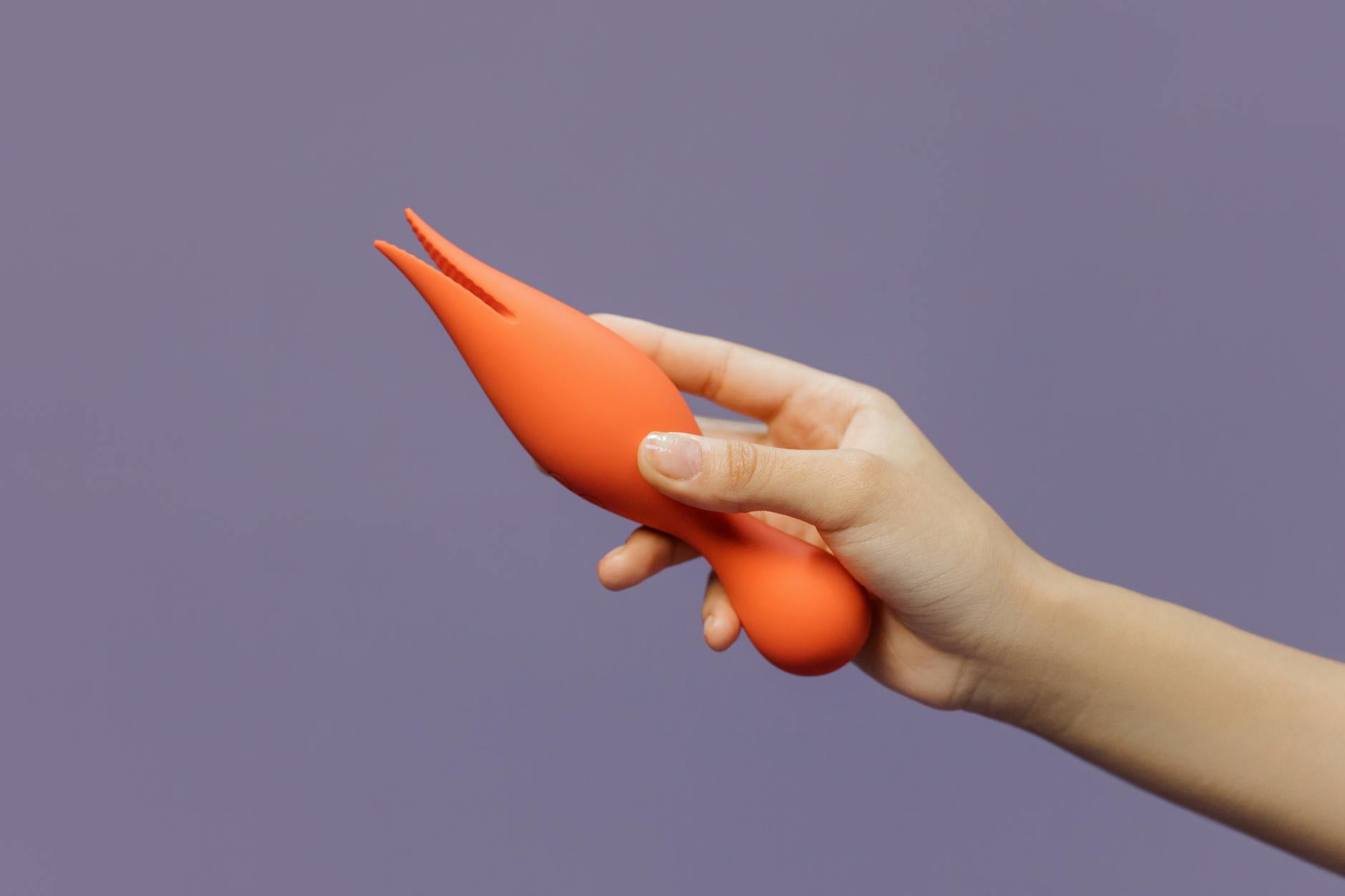
How to Integrate Lemon Vibrators Into Partnered Sex Without Awkwardness
Here's the thing. Most people who buy a clitoral vibrator for partnered sex never actually use it with their partner. They use it alone, feel a little guilty about the secrecy, and the device ends up in a drawer. The obstacle is almost never the vibrator itself. It's the conversation.
Introducing a lemon vibrator (or any toy) into sex with a partner forces you to name something that's usually unspoken: that your body might need something different than what your partner alone can provide. That's vulnerable. That feels risky. That's why people avoid it.
But here's what I've seen in my practice, over and over: couples who actually have this conversation end up closer, not farther apart. The vulnerability opens something. Let me walk you through exactly how to do this without it feeling weird.
The real reason you're nervous (and why it's not what you think)
Most people are afraid their partner will feel replaced or inadequate. That's the stated fear. But dig a little deeper, and the real fear is usually something else: "If I ask for this, will they think I don't enjoy sex with them?" or "Will they think I've been fantasizing about someone else?" or worst of all, "Will they say no?"
None of those are actually about the vibrator. They're about intimacy, desirability, and trust. The good news is that naming those fears directly almost always dissolves them. Partners who feel rejected by the request "Can we try using a vibrator?" are almost never actually bothered by the vibrator. They're reacting to feeling left out of the conversation.
So before you even mention a lemon vibrator, get clear on what you actually want. Do you want more intense stimulation? Hands-free pleasure so you can focus on your partner? The ability to come more reliably? A specific sensation you can't get any other way? You need to know this because your partner will ask, and "I don't know, I just want to try it" lands very differently than "I want to come faster so I can stay inside you longer."
How to start the conversation (four scripts that actually work)
Timing matters. Don't bring this up during sex, and don't bring it up when you're already frustrated about your sex life. Bring it up over coffee, or a walk, or anywhere you can both be calm and face each other.
Here are four openings that work:
"I've been thinking about something I'd like to try in bed." Then pause. Let them ask what. This gives them a moment to orient themselves before you say the word vibrator. It's a small thing, but it prevents defensive reactivity.
"I read that a lot of couples use vibrators, and I'm curious if you'd be open to trying one." This de-personalizes it slightly. You're not saying "I need this because you're not enough." You're saying "This is a normal thing people do."
"I think it would feel amazing for me, and I'd love to include you in figuring out how." This is the gold standard. You're expressing desire (which is hot), and you're saying "I want this with you, not instead of you."
"I've never experienced an orgasm with a partner, and I want to try something that might help me get there." If this is true, it's the most powerful opener. It reframes the vibrator as a tool for connection, not as a replacement.
After any of these, pause. Let them react. They might ask questions. They might need time. Both are fine. Don't oversell it. Don't defend it. Just let it exist as something you want to explore.
What to do if they say no (or act scared)
If your partner rejects the idea outright, you have a bigger conversation on your hands. This isn't about the vibrator anymore. It's about whether your partner is willing to explore your pleasure as part of the relationship. That's a real question, and it deserves a real answer.
But "no" often comes from fear, not actual opposition. Your partner might worry that:
A vibrator means you're not satisfied. (Translation: "Will you still want me?")
You're secretly wishing they were someone else. (Translation: "Am I enough?")
They'll feel emasculated or inadequate. (Translation: "Is my role in this relationship changing?")
If your partner expresses any of these fears, don't argue. Just listen and reassure. "A vibrator is a tool, like lube. It's not about what you can't do. It's about adding something that feels good." Repeat as needed.
Many partners feel differently once they see that you're not trying to hide anything. Showing them the toy, letting them hold it, explaining exactly what you want to do with it—that transparency is powerful. Secrecy breeds resentment. Openness breeds curiosity.
The first time: positioning and what actually helps
Once you're on the same page, most people get nervous about logistics. Where does the vibrator go? What does your partner do with their hands? Is it weird if you're facing them?
It's not weird. It's practical. Here are the positions that work best:
You on top (your partner underneath). You have full control of the vibrator, your partner can watch and touch you, and they can move inside you or be inside you while you use the toy on your clitoris. This position lets both of you stay present.
You on your back, them between your legs. Classic position. They can enter you while you use the vibrator, or you can use it while they focus on other kinds of touch. They can see your face and watch what you're doing.
Spooning, from behind. Surprisingly intimate. They're behind you, you're in control of the vibrator in front. There's a lot of skin contact, and it feels less like "toy insertion" and more like "we're exploring this together."
Start slow. Use the lowest setting. Lemon vibrators like the Lem use air-suction technology rather than traditional vibration, which means the sensation is intense but not overwhelming. Your partner might be surprised by how quiet it is, and how much they can actually feel you respond.
Talk while you're doing this. "That feels good." "Keep moving like that." "I like this pattern." Your partner needs to know they're still part of the experience, and you need to feel like they're present, not just waiting for you to finish.
The feeling of exclusion (and how to prevent it)
Here's what I hear from partners sometimes: "I felt like she wasn't interested in me anymore once the toy came out." That's a real feeling, and it usually happens because the person with the vibrator got so focused on the sensation that they completely checked out emotionally.
You can prevent this by staying connected. Keep eye contact. Keep your hands on your partner. Ask them to do things—hold you, kiss you, touch you somewhere else. Use the vibrator as something that happens in the middle of partnered sex, not as a replacement for it.
Similarly, if your partner is using the vibrator on you, they need to stay present too. Lots of partners get nervous and just hold it in one place mechanically. That's not sexy for either of you. Move it. Pay attention to your partner's reactions. Make it playful.
Integrating it into your regular rhythm
After the first time, most couples find their groove pretty quickly. The vibrator stops feeling like a special event and becomes part of the toolkit, like lube or different positions.
Some people use it every time. Some people use it occasionally when they want to come faster or more intensely. Some people use it when they're tired or when penetration alone isn't quite doing it. None of those is the "right" way. It's just whatever works for you.
The integration happens faster if you keep talking about it. "I really loved that last night." "Want to try it again?" "Can you move differently while I'm using it?" These small comments keep the door open and prevent the vibrator from becoming a forbidden or embarrassing object.
One thing I recommend to every couple: store the vibrator somewhere visible and accessible. Not hidden in a nightstand drawer. Somewhere you can both see it and grab it without it being a whole conversation. This sounds small, but it's genuinely powerful. It signals that pleasure is normal and shared.
When to use a vibrator and when to skip it
Not every encounter needs a vibrator. Sometimes the best sex is simple and tool-free. The point of integrating a lemon vibrator or other clitoral vibrator into partnered sex isn't to make every moment about the toy. It's to have options.
Use a vibrator when:
You want to come faster and you're running short on time.
You're tired but still interested in pleasure.
You want intensity you can't get any other way.
Your partner wants to learn exactly what makes you orgasm.
You're exploring a new sensation together.
Skip the vibrator when you're fully present and things are already working. Sometimes the best sex requires nothing but attention.
The bigger picture: what this actually means
Introducing a vibrator into partnered sex isn't really about the vibrator. It's about agreeing that both partners' pleasure matters equally. It's about saying "I want you to feel amazing, and I also want to feel amazing, and we can have both." That's the conversation. The toy is just the thing that makes it concrete.
If your partner is open to this, you're in a relationship where vulnerability is safe. That's the baseline for real intimacy. Everything else, including which toy you use and how often, is just details.
People also ask
Can you use a vibrator if you have a male partner?
Absolutely. In fact, partners with penises often love the idea once they realize the vibrator isn't a replacement for them. Many men find it hot to watch their partner experience intense pleasure. And if penetration is happening while you use the vibrator, they get to feel the vibrations too.
Will using a vibrator make me dependent on it for orgasms?
Not if you don't want to be. Your body doesn't "learn" to need a vibrator. You're just learning what feels good. You can come with a vibrator one time and without it the next. They're not mutually exclusive.
What if my partner wants to use the vibrator but I don't like having it used on me?
That's fine. Some people love vibrators for their own use during partnered sex but don't want their partner controlling it. Some people are the opposite. You get to have different preferences. The conversation is the same: name what you want and what you don't want.
Is it weird to use a vibrator if we already have really good sex?
Nope. Vibrators aren't a fix for bad sex. They're a way to explore new sensations and intensities, even in a relationship where things are already working great. Think of it like going to a new restaurant when you have a favorite. You're not abandoning the favorite, you're just trying something new.
How do I know which vibrator to start with?
Start with something simple and quiet. Lemon vibrators like the Lem are specifically designed to be easy to incorporate into partnered sex because the sensation is intense but the device itself is small and discreet. Read reviews, check out a buying guide if your brand offers one, but mostly just pick something that appeals to you and trust that your body will tell you if it's right.
What if the vibrator feels too intense?
Start on the lowest setting and work your way up. Most vibrators have multiple intensities for exactly this reason. You can also try using it over underwear or with your hand in between, which softens the sensation. And if a particular vibrator just doesn't work for your body, that's okay. Try a different one.
The takeaway
Integrating a lemon vibrator or clitoral vibrator into sex with a partner is mostly about having one honest conversation and then giving yourself permission to explore. The conversation feels scary beforehand. It's almost never scary in the moment, and it's almost always worth it. Your pleasure matters. Your partner's willingness to prioritize it matters even more. Everything else is just logistics.
If you're stuck on how to start the conversation, or if your partner is hesitant and you want ideas for moving through that, that's what I'm here for. Reach out anytime.