Your body is changing, and that's completely normal
Let's be real. Somewhere between 38 and 42, something shifts. Your natural lubrication doesn't show up the way it used to. You might notice it takes longer to feel ready. Or you're ready mentally but your body seems to be on a different timeline. That's not dysfunction. That's biology.
The good news? Your capacity for pleasure doesn't go anywhere. It just needs a different approach. And if you're already using a lemon vibrator, you're already halfway there because the suction design of these toys works beautifully once you adapt the technique.
What actually happens to lubrication in your 40s
Vaginal lubrication is orchestrated by estrogen. As you move through your late 30s and into your 40s, estrogen availability shifts. Some months it's lower, some months it's higher. For about 20 percent of people, this happens gradually and barely registers. For the other 80 percent, it's noticeable.
The tissue itself gets thinner. The glands that produce lubrication become less reactive to arousal. You might need 15 to 20 minutes to achieve what used to happen in five. This isn't weakness. This is a literal change in how your endocrine system is calibrated.
Here's what doesn't change: the number and density of nerve endings in your clitoris. The sensitivity of the tissue. Your capacity to reach orgasm. If anything, the orgasms many people experience after 40 are more intense because the mental noise has quieted down and the permission to focus on yourself has finally arrived.
Why a lemon vibrator is actually ideal for this transition
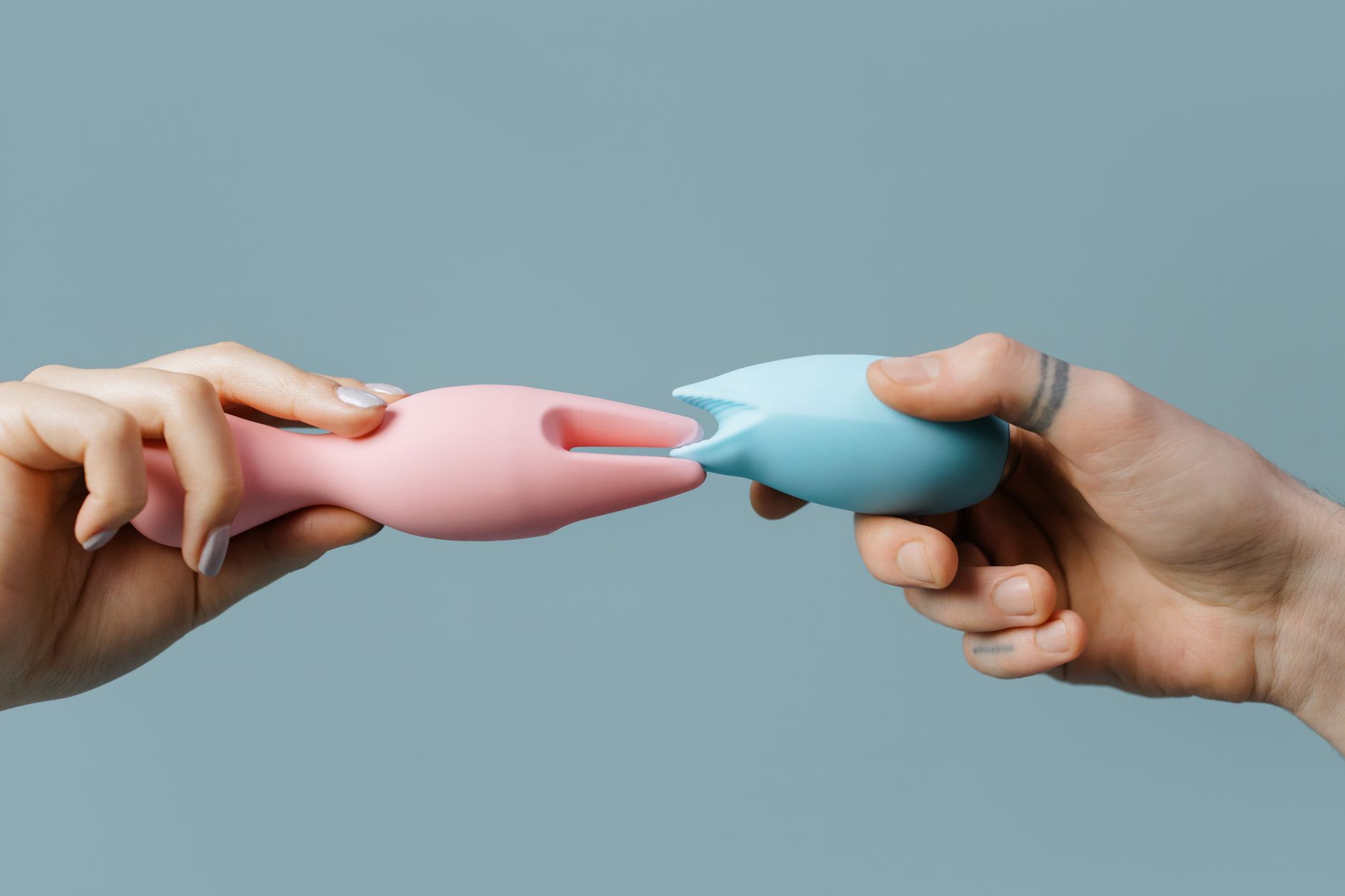
The Lem and other lemon-style clitoral vibrators use air-suction technology instead of traditional vibration. Suction stimulates nerves without requiring the same level of direct friction that wand toys or bullet vibrators demand.
This matters when lubrication changes. With a wand toy, you're relying on your own natural lubrication or added lube to create a smooth glide. If that's not there, friction can feel uncomfortable or even sharp. Suction doesn't have that problem. The seal itself creates the sensation. Lube isn't required for a lemon vibrator to work well, though it can enhance the experience.
That said, using a lemon clitoral vibrator intelligently after 40 means understanding how to approach it differently than you might have at 30.
The warm-up protocol that changes everything
This is the non-negotiable adjustment. Forget the assumption that arousal is a light switch. Think of it as a dimmer that now moves more slowly.
Give yourself 20 to 25 minutes before you introduce the toy. This isn't wasted time. This is the time your body needs to redirect blood flow to your clitoris and for the tissue to become more responsive. Use this time however makes sense. Some people benefit from touch that isn't goal-oriented. Others prefer mental focus, fantasies, or a slower partner interaction.
Then, when you introduce the lemon vibrator, start at the lowest setting. Many people jump to pattern 3 or 4 out of habit. At 40-plus, patterns 1 and 2 are often more effective because the tissue is more responsive than it used to be. You're not compensating for numbness. You're working with enhanced sensitivity.
The seal matters too. Make sure the lem vibrator is creating a complete seal on your clitoris. A loose seal means the suction doesn't build, and you lose the mechanism that makes these toys so effective. If you're struggling with fit, that's worth exploring with a smaller or larger toy, but don't assume the toy is the problem before checking the seal.
Lubrication strategy that actually works
You have options here, and they're not all the same.
Water-based lubricants are your friend because they're compatible with silicone toys and easy to clean up. Brands like Astroglide or Sliquid work well. Apply it to your vulva before you start, not just to the toy. This does two things: it warms up during foreplay, and it signals to your body that sex is happening, which can kickstart your natural lubrication reflex.
Silicone-based lubes like Eros feel richer and last longer. The downside is they stain fabric and damage silicone toys, so they're not ideal for a lemon vibrator. Stick to water-based.
Honestly? Many people in their 40s find that a little lube changes everything. It's not about being broken. It's about working with your biology instead of against it. Using lube is no different from wearing glasses when your vision changes.
The rhythm adjustment that makes sense
Longer warm-up, lower initial intensity, and one more thing: patience with the buildup. Orgasms after 40 often take longer to arrive, but they're often more intense when they do. This is because the nervous system has more time to fully activate.
Instead of five minutes to climax, budget 12 to 15 minutes with the toy itself. This is normal. This is your new baseline. Fighting against it or rushing it only creates frustration.
Many people also find that the positioning that worked before stops working. If you usually use a lemon vibrator lying on your back, try side-lying. If you're kneeling, try standing with knees slightly bent. Small changes in angle change the pressure and sensation, and sometimes that's exactly what you need when your tissue has recalibrated.
When to talk to a doctor
If lubrication changes are accompanied by pain, itching, or burning, that's not normal aging. That's a signal to see a gynecologist. Genitourinary syndrome (sometimes called atrophic vaginitis) is real, common, and treatable. Topical estrogen creams work beautifully for this and have minimal systemic absorption. You can use them and still feel confident you're making a safe choice.
If you're on medications that affect lubrication, antihistamines or antidepressants for example, talk to your prescriber about timing. Sometimes taking medication at night instead of morning reduces sexual side effects. Sometimes a different medication in the same class works better. Your doctor might not bring this up first, but they'll engage with the conversation if you start it.
One more thing: if your libido has completely tanked along with lubrication changes, that's worth exploring. It could be hormonal, it could be relational, it could be stress. A good therapist can help untangle it.
The emotional piece that people skip
Here's what I see in my practice constantly. Someone hits 40, lubrication changes, and they interpret it as the end of their sexual life instead of the beginning of a new chapter. The narrative flips from "I'm desirable" to "I'm aging out."
Both stories are fictions. Your body is changing. That's all. The change doesn't diminish your pleasure capacity. If anything, it often deepens it because the permission to focus on yourself becomes harder to ignore.
If you're with a partner, separate conversations help. "My body is responding differently" is a logistics conversation. "I want us to stay connected" is a relational conversation. Smoosh them together and you end up with both of you feeling blamed and defensive.
If you're solo, this is the moment to stop apologizing to your own body and start getting curious. A lemon vibrator, lube, and permission to take your time can create some of the most satisfying experiences of your life.
FAQ: What people actually ask
Can I still use my lemon vibrator without lubrication at all?
Yes. The suction mechanism doesn't depend on lubrication the way friction-based toys do. That's one reason the lem vibrator is so good for this life stage. That said, adding even a small amount of water-based lube changes the sensation pleasantly. It's not necessary. It's an enhancement.
How do I know if my lubrication changes are normal or a symptom of something else?
Gradual decrease over a few months to a year is normal. Sudden, dramatic change is worth mentioning to your doctor. Pain, itching, or unusual discharge is always worth investigating. Your body speaks a clear language when something is off.
Does my partner need to know about lubrication changes?
If you're with someone, yes. Not as "I'm broken," but as "My body is responding on a different timeline now. Here's what helps." Partners who understand often become better lovers because they're no longer taking the change personally.
Is water-based lube safe to use with a lemon clitoral vibrator?
Completely safe. Water-based lubes are the ideal choice for silicone toys. Just make sure you're using a true water-based lube, not a water-based gel mixed with silicone. Read the ingredients. If it says "silicone" anywhere, save it for your hands or use it with glass or metal toys only.
Will using more lube make me feel less sensation?
Not at all. If anything, lube helps the tissue feel more responsive because it's not fighting friction. Some people feel more, not less. The lube is a tool. It's not a workaround. It's an amplifier.
Is it normal for orgasms to take longer after 40?
Completely normal. The nervous system takes more time to fully activate. You're not broken. You're more complex now. Many people find this is actually when they learn to have truly satisfying orgasms because they've stopped rushing and started paying attention.
The real story
Your 40s are not the end of sexuality. If anything, they're often the beginning of a version you actually like because you've stopped performing and started experiencing. Lubrication changes, sure. That requires adjustment. But adjustment is not loss. It's a recalibration of a system that still works beautifully.
If you're working with a lemon vibrator, you've already made a smart choice because these toys are genuinely engineered for tissue that needs a different approach. Pair that with a longer warm-up, a little lube if it feels right, and permission to move at your body's actual pace, and you're not just managing a change. You're unlocking something better.
Ready to explore what works for your body now? Get in touch with us if you want to talk through what might work best for you, or dive into our full collection at Hello Nency.