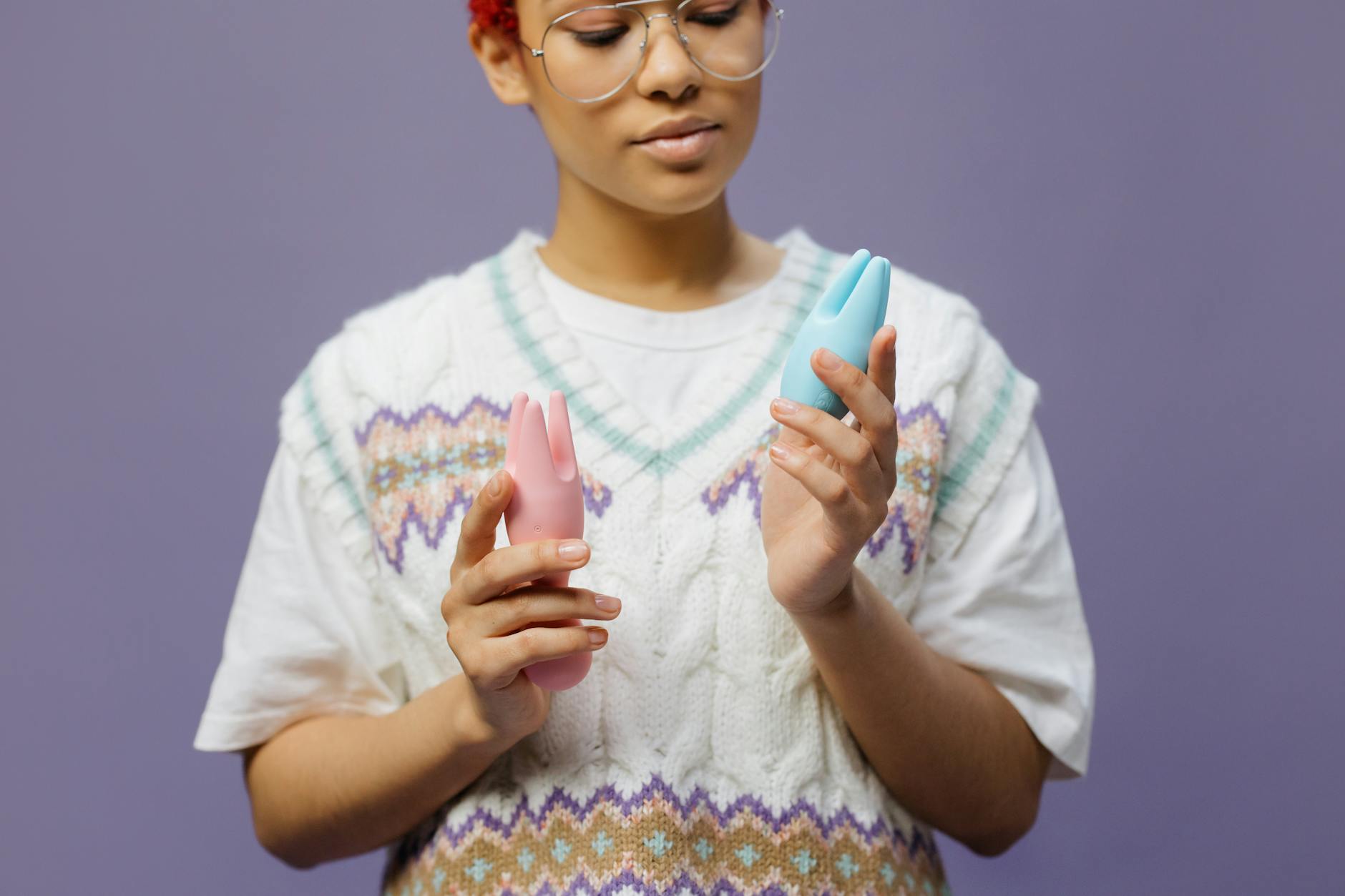
Let's start with what nobody names out loud
Relationship changes kill intimacy faster than almost anything else. Not because the relationship is bad. Often it's the opposite. You move in together, add kids, navigate a career pivot, weather a betrayal recovery, or simply wake up one day and realize you've drifted into a rhythm that feels more like logistics than connection. Your partner might want to reconnect physically, but your body isn't on board. Or you want to reach for them, and the old patterns don't work anymore.
Here's what I see across decades of working with couples: the people who rebuild pleasure fastest are the ones who stop waiting for the relationship to "fix itself" and instead use solo exploration to remember what their own arousal feels like. That's where tools like the lemon vibrator come in. Not as a replacement for your partner. As a translator between your mind and your body while the relationship recalibrates.
Why relationship shifts throw off your pleasure response
When a relationship changes, your nervous system changes with it. Maybe trust was broken and you're rebuilding it. Maybe you've been so focused on a partner's needs or a crisis that your own arousal signals got buried. Maybe you've been touching each other the same way for fifteen years and neither of you knows how to start differently. Maybe one of you has less desire and the other feels rejected, and now sex carries the weight of that wound.
All of that lives in your body. Your clitoris doesn't respond the same way when your brain is processing betrayal or resentment or just exhaustion. Arousal isn't a switch. It's a chain reaction in your nervous system, and if your nervous system is busy protecting you, pleasure takes a backseat.
The research backs this: couples who experience major relationship ruptures often see a return of sexual desire only after they've done the work to restore safety. But here's the practical problem. You can't restore safety with someone else until you remember what safety feels like in your own body first.
The case for solo pleasure during relationship rebuilding
This feels counterintuitive to a lot of people. If the problem is disconnection from my partner, shouldn't I be working on that together? Yes, eventually. But right now, you need to remember that you have pleasure independent of another person's response to you.
When you use a lemon vibrator alone, you're not avoiding your partner. You're doing the foundation work. You're relearning your body's arousal language. You're discovering what intensity, speed, and rhythm actually feel good to you now, not what felt good ten years ago or what you think "should" feel good. You're building evidence in your nervous system that pleasure is available to you, that you're not broken, that desire can return.
For most people, that rebuilds safety faster than trying to force intimacy with a partner when your body doesn't feel ready.
How to start with a lemon vibrator when you're emotionally guarded
If relationship changes have left you feeling wary or disconnected, the first rule is: don't push arousal. The lemon clitoral vibrator's design actually helps here. It uses suction and pulsing rather than direct vibration, which means you can start low and gradual. You're not forcing stimulation into a nervous system that's still in protective mode.
Begin with the lightest settings. Set aside 20 to 30 minutes when you have genuine privacy. Not squeezing it in between tasks. Your body needs to know that this time is for you, not stolen from something else. Use a water-based lubricant even if you think you don't need it. Lubrication isn't just physical. It's a signal to your nervous system that you're taking care of yourself.
Start touching your body first without the vibrator. Neck, breasts, inner thighs. Let your nervous system settle into the idea that pleasure-seeking is safe right now. Then introduce the lemon vibrator at the lowest intensity. The suction patterns are gentler than traditional vibration, which works well when your body's been holding tension.
If you feel nothing, don't panic. That's common when you're emerging from a period of emotional distance. Stay with it. Arousal builds gradually. Let your mind wander. Fantasy, memory, curiosity, whatever arrives. Don't perform for an imagined audience. Notice what actually makes you want to come back tomorrow.
Rediscovering intensity preferences after relationship rupture
One of the stranger side effects of relationship disconnection is that your pleasure preferences often shift. Maybe you liked direct, intense stimulation before. Now that feels overwhelming. Or you need more intensity than you used to. This isn't a sign that something's wrong with you. It's your body reflecting where you are now.
With a lemon vibrator, you have multiple intensity levels and pattern options. Use this to experiment without judgment. Some sessions you'll want pattern one (gentle, rhythmic). Other days you'll need pattern four (intense and variable). Neither is better. Both are information about where your nervous system is.
Many of my clients find that exploring intensity range solo helps them communicate better with a partner later. Instead of "I don't know what I want," you can say "I've been enjoying this intensity, but I'm curious about trying something gentler." You're reporting data, not apologizing.
Using solo practice to rebuild partnership intimacy
Here's where the solo work actually serves the relationship. After three or four weeks of regular solo practice with your lemon vibrator, you'll likely notice something shift. Not a dramatic transformation. A subtler thing. You'll feel more present in your body. Arousal will feel more accessible. Your nervous system will have evidence that pleasure is recoverable.
Then, when you're ready, you can bring that groundedness into partnered intimacy. You might start by sharing what you've learned. "I've been using a lemon vibrator on my own, and I've found that I like this intensity." That's vulnerable. It also restarts the conversation about pleasure in a way that's less loaded than "we need to fix our sex life."
Some couples explore together after that. Some people use their lemon clitoral vibrator during partnered sex. Some use it solo forever, and that's fine too. The point is that you've reset your relationship to pleasure from a place of self-knowledge, not desperation.
When to bring a partner in (and how)
You don't have to. That's the first thing to say. Solo pleasure is complete pleasure. But if you want to rebuild intimacy with a partner, timing matters. Start the conversation when you're not in the middle of conflict. Maybe over tea, not in bed.
Try: "I've been learning more about what my body responds to, and I'd like to share that with you." Then show them. Let them watch. Let them ask questions. A lot of couples find this less threatening than the usual "let's have better sex" talk because it's grounded in curiosity, not criticism.
If your partner is interested in participating, the lemon vibrator works well in partnered sex too. Some people like their partner to use it on them. Some use it while their partner is inside them. Some use it as foreplay while everything else unfolds. There's no script. The practice you've done alone gives you the vocabulary to figure out what actually works for both of you.
The difference between solo pleasure and partnered sex (and why it matters)
One thing I want to be very clear about: reconnecting with solo pleasure doesn't mean you're replacing your partner. It means you're remembering that your pleasure exists separately from their participation or response. This is actually what heals disconnection over time.
Partners who feel less pressure to "produce" your orgasm often become more present. They stop performing and start connecting. You stop waiting for them to turn you on and start showing up already partially aroused. The dynamic shifts from one person trying to do something to another to two people exploring something together.
A lemon vibrator in this context isn't a substitute. It's a communication tool. It says: "Here's what my body wants. Here's what feels good. Here's me taking responsibility for my own pleasure." That's attractive in a relationship. It's also the foundation for trust rebuilding.
FAQ: Reconnecting with pleasure after relationship changes
How long does it take to feel arousal again after relationship distance?
There's no standard timeline, but most people start noticing shifts within two to three weeks of consistent solo exploration. Some feel it sooner. Some need longer. The key is consistency without pressure. You're training your nervous system to feel safe seeking pleasure again. That's slower than you'd like, probably. But it's also faster than waiting for your partner to fix it.
Is it weird to use a vibrator alone if I'm in a relationship?
Not even slightly. Some of the strongest long-term couples I work with have robust solo practices. It actually reduces pressure on partnered sex. You're not relying on your partner for all your pleasure. You're showing up more whole. That makes partnered intimacy better, not worse.
What if my partner feels threatened by me using a lemon vibrator?
That's usually fear dressed up as logic. The fear is usually: "Will this replace me?" or "Does this mean something's wrong?" Have that conversation directly. Share what you're learning. Invite them in if you want. But don't skip your own pleasure to manage their insecurity. That's just recreating the disconnection pattern.
Can a lemon clitoral vibrator actually help rebuild desire in a relationship?
It can't rebuild desire on its own. But it removes a major barrier. When you reconnect with your own arousal, you're less numb. Less numb means more available. More available means the relationship has something to work with. It's not magic. It's removing friction.
How do I know if my lack of pleasure is about the relationship or about me?
Often it's both. But the fastest way to find out is to separate them. Use solo time to notice what your body wants independent of relationship dynamics. If arousal returns when you're alone, you know the relationship shift is the primary driver. If you still feel numb alone, there might be something else (stress, medication, hormones, depression). Then you have clearer information for addressing it.
Should I tell my partner I'm using a lemon vibrator?
That's your call. Some people keep solo pleasure private. Some share. Neither is wrong. But if you're rebuilding intimacy together, transparency often helps. It signals that you're doing the work. It also opens the door to them being part of the solution, which can be bonding.
The bigger picture
Relationship changes are messy. They interrupt patterns. They expose things that were working fine when nobody was paying attention. But they also create an opportunity. You get to rebuild pleasure not from habit, but from intention. You get to figure out what you actually want, not what you've always done.
A lemon vibrator is a small tool for this. But it's concrete. It sits in your hand. It responds to your body. It doesn't require negotiation or vulnerability with another person to work. And that's exactly what you need right now. Solo pleasure. Your body. Your terms. Everything else can follow from there.
When you're ready to explore reconnection with a partner or to deepen your understanding of your own pleasure, we're here. You can always reach out to chat through what's next.