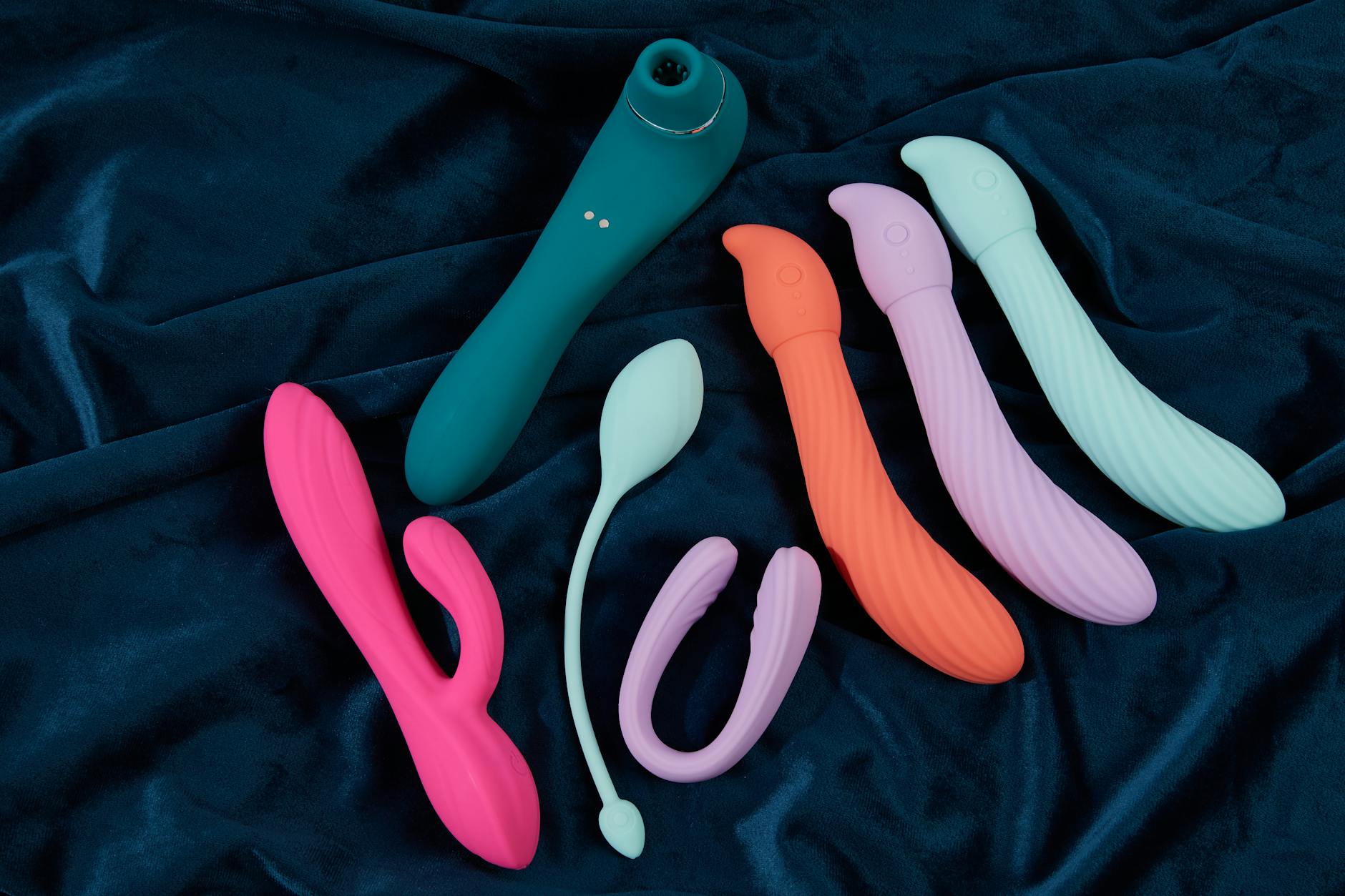
The hormone conversation nobody has with you
Let's be real: your pleasure changes throughout your cycle. Not in a "you're broken" way. In a "your nervous system is literally responding to different hormone levels" way. Most people notice this and immediately assume something is wrong. Spoiler alert: it's not.
Here's what actually happens when estrogen fluctuates. Your tissue thickness changes. Blood flow to the genitals shifts. The speed at which arousal builds increases or decreases. Your nerve sensitivity in the clitoral area responds differently depending on whether estrogen is climbing, peaking, or dropping. None of this is random. All of it is manageable once you understand it.
The problem is that most vibrators are one-speed solutions. They don't adapt to your body. A lemon vibrator, with its intensity range and suction mechanism, does. That's why people who track their cycle and adjust their approach often experience more consistent pleasure and fewer frustrating sessions.
What estrogen actually does to arousal
Estrogen is a tissue thickener. When estrogen is high (typically days 8-14 of your cycle), genital tissue swells slightly, blood flow increases, and the clitoris becomes more engorged and accessible. Arousal builds faster. Sensation feels sharper. You might orgasm more easily or intensely.
When estrogen drops (after ovulation, and again before your period), tissue thins. Blood flow decreases. The clitoris becomes less engorged. Arousal takes longer to build. The sensation can feel duller, or it can feel rawer depending on the person. This is not pleasure disappearing. It's pleasure shifting.
Most wand vibrators, with their rigid vibration pattern, don't account for this. They buzz the same way whether you're in the high-estrogen or low-estrogen phase of your cycle. Some days that works beautifully. Other days it feels either too intense or like you're doing all the work.
A lemon clitoral vibrator works differently. The suction mechanism gently stimulates rather than delivering constant friction. This means during high-estrogen phases, you can dial intensity up and let suction do the work. During low-estrogen phases, you can drop to pattern 1 or 2 and avoid overstimulation while still building arousal effectively.
Mapping your cycle to your tool
Here's a practical framework I recommend to clients:
Follicular phase (days 1-14): Higher estrogen, faster arousal, more sensation tolerance. This is when intensity setting 4-5 on a lemon vibrator often feels ideal. Your tissue is more forgiving. Suction stimulation reaches nerve endings more easily because of increased blood flow. If you want to experiment with longer sessions or more intense patterns, this is your window. Solo or partnered, this phase often feels easier for reaching orgasm consistently.
Ovulatory phase (days 14-16): Peak estrogen, peak sensitivity, potential for multiple orgasms. This is the sweet spot for many people. Tissue is maximally engorged. Arousal is almost instantaneous. Intensity setting 3-4 often produces the fastest results. Some people report their most intense orgasms happen during this narrow window. If you're interested in exploring that, a lemon vibrator's suction mechanism is gentler on peak sensitivity than a traditional vibrator, which can feel overwhelming at this peak.
Luteal phase (days 17-28): Lower estrogen, slower arousal, different sensation. This is where the conversation usually breaks down. People assume lower pleasure means broken pleasure. Actually, it means different pleasure. Intensity setting 1-2 on a lemon vibrator works better here because you need more time to build arousal without overstimulation shutting things down. Your nervous system is primed toward relaxation rather than stimulation. Longer warm-up time (20-30 minutes) becomes your friend. Solo play often feels more satisfying than partnered sex during this phase because there's no performance pressure.
Why suction works better across hormone phases
Traditional vibrators use high-frequency vibration. That friction-based approach can feel harsh or overwhelming when estrogen is low and tissue is thinner. Suction-based stimulation (which is what a lemon vibrator delivers) works differently. It creates rhythmic pressure and release rather than constant friction. This gentler mechanism is actually more adaptable to hormonal shifts.
When estrogen is high: suction feels intense and satisfying without being aggressive. You get strong sensation without the harshness of vibration friction.
When estrogen is low: suction still stimulates effectively, but without the raw feeling that vibration can create. The rhythmic pressure-release pattern can actually feel soothing rather than overstimulating.
There's also a practical physiological reason for this. Suction stimulates deeper nerve clusters around the clitoral complex, whereas vibration stays more surface-level. Deeper nerve stimulation often produces more consistent sensation across hormonal phases because it's less dependent on tissue thickness.
Adjusting technique through hormonal shifts
Beyond tool choice, technique changes matter. Here's what shifts I recommend:
Warm-up duration: High-estrogen phases need 5-10 minutes of foreplay or mental priming. Low-estrogen phases need 15-25 minutes. Your nervous system literally needs more activation time. This isn't a flaw. Budget for it.
Pressure application: During high-estrogen phases, apply the lemon vibrator directly with moderate-to-firm pressure. During low-estrogen phases, use lighter pressure initially and let arousal build before increasing pressure. This prevents the shut-down sensation that comes from overstimulation when tissue is sensitive but not fully engorged.
Pattern selection: Most lemon vibrators have 8-10 patterns. High-estrogen phases tolerate the higher-frequency patterns (typically patterns 7-10). Low-estrogen phases respond better to the lower, gentler patterns (typically 1-3). Mid-cycle exploration is when to experiment with the patterns you don't normally use.
Duration: Some research suggests orgasms during high-estrogen phases happen faster but feel shorter. Low-estrogen phase orgasms take longer to build but often feel more diffuse and longer-lasting. This means adjusting your expectation of session length depending on where you are in your cycle prevents frustration.
What changes during hormonal birth control
If you take hormonal birth control, your estrogen and progesterone levels stay relatively flat. This actually means your pleasure response stays more consistent throughout the month, which some people find liberating (no guessing). However, many people on hormonal birth control report slightly muted arousal overall because estrogen levels are deliberately kept lower than they naturally spike.
If this is you, a lemon vibrator's variable intensity becomes even more valuable. You're not chasing a moving target with your hormones. You're just optimizing for a consistently lower baseline of arousal. Starting at intensity 2-3 and building gradually often works better than diving into intensity 5-6 right away. The suction mechanism's gentleness becomes your advantage.
Some people find that taking a break from hormonal birth control for a month to experience natural hormone fluctuation helps them recalibrate what pleasure feels like at different phases. Whether you stay on birth control or not, knowing how your tool adapts to your body is empowering.
Managing spotting, hormonal acne, or other mid-cycle surprises
Hormonal fluctuations sometimes come with bloating, acne flares, or emotional shifts that kill desire regardless of tissue changes. This is when I tell clients to shift from performance-oriented pleasure to maintenance pleasure. You're not chasing orgasms. You're maintaining connection to your own body during a phase when connection might feel distant.
This is where a lemon clitoral vibrator at intensity 1-2 becomes meditative rather than goal-focused. A 10-minute session just to feel something, without pressure to orgasm, can actually reset your nervous system and rebuild desire for the next phase. It's not wasted time. It's maintenance.
FAQ: Hormones, cycles, and lemon vibrators
How do I know if my low arousal is hormonal or something else?
If your arousal dips predictably at the same point in your cycle every month, it's likely hormonal. If it's unpredictable or new, check stress, sleep, relationship dynamics, and medication. Hormones are one piece. If you're consistently low-arousal across all phases, that's worth a conversation with a gynecologist or therapist, not a tool upgrade. A lemon vibrator can help you work with hormones once you've ruled out other factors.
Can I use a lemon vibrator during my period?
Absolutely. Many people find that during menstruation, when estrogen and progesterone are at their lowest, a lemon vibrator at low intensity feels soothing. Some find orgasms during their period relieve cramps. Others find period sex emotionally intimate in a way that's separate from pleasure. All of these are valid. Just rinse the toy after use, ensure you're using it on clean external tissue only, and listen to your body about pressure.
Does a lemon vibrator work better at specific phases, or is it just about intensity?
It's both. The tool's suction mechanism is gentler than vibration, which helps across all phases. But intensity settings matter most. High-estrogen phases can use higher intensity. Low-estrogen phases need lower intensity. Think of it as the tool being flexible, but your technique adjusting to your hormones.
I'm on hormonal birth control and my arousal feels flat. Will a lemon vibrator fix this?
No tool fixes it alone. A lemon vibrator can help you explore pleasure within the flatter arousal baseline that birth control creates. But if you're interested in higher natural arousal, that's a conversation to have with your prescriber about whether your specific birth control formula might be contributing. Some formulas suppress arousal more than others. A tool works best when the underlying hormonal situation is working for you too.
What if I don't track my cycle? Can I still benefit from adjusting intensity?
Completely. Even without formal tracking, most people notice they feel more or less aroused at different times. Just pay attention to when that shifts and adjust your lemon vibrator's intensity accordingly. You don't need data. Intuition works fine.
Can estrogen supplements or topical creams affect how a lemon vibrator feels?
Yes. If you're using topical estrogen cream (common for menopausal or post-menopausal people), tissue thickness increases locally, which means the clitoral area becomes more engorged and responsive. You might find you tolerate higher intensity better. This is normal. Your tissue has more cushioning. Adjust upward gradually and notice what feels best. Never assume you need to stay at one intensity forever. Your body changes, and your tool choice should adapt.
The permission piece
Here's what I really want you to understand: your pleasure is not supposed to be static. It fluctuates with your hormones, your stress, your relationship, your health, and your life phase. A tool that adapts to those shifts, rather than asking you to perform the same way every single time, is one that meets you where you actually are.
That's what a lemon vibrator does. It's not a magic fix for hormonal shifts. It's a flexible tool that works with your body instead of against it. Pair that with attention to where you are in your cycle, and you move from "why doesn't this work today" to "ah, this is the low-estrogen phase, let me adjust." That shift from frustration to understanding is everything.
Your pleasure matters. So does understanding your body. Let both guide you.