
The thing about delayed climax no one talks about
You're not broken. Your body isn't too numb. You don't need to "relax more" or "think about it less." Delayed orgasm, also called anorgasmia when it's severe, happens for concrete physiological and psychological reasons. And the fix usually isn't about trying harder. It's about changing your approach entirely.
Delayed climax affects roughly 10-15% of women and people with vulvas, and it's one of the most underdiagnosed pleasure problems in relationships. Most people spend years assuming they're the issue before realizing the issue is strategy.
Why delayed climax happens in the first place
There are really only a handful of root causes, and they stack on top of each other.
Neurological desensitization. If you've been using the same stimulation pattern for years, your nervous system adapts. The brain stops registering the input as novel or arousing. Your clitoris isn't numb. Your brain is bored.
Pelvic floor tension that never releases. Stress, trauma, or even habitual tension in the pelvic floor muscles creates a catch-22. The tension prevents full arousal, and the frustration of not climaxing creates more tension. It becomes a feedback loop that nothing penetrative can fix.
Medication side effects. SSRIs, hormonal contraceptives, and blood pressure meds all suppress orgasm. If you started taking something new and orgasms got harder, that's usually the culprit, not you.
Mental load and distraction. Partner performance anxiety, work stress, body image concerns. Your brain is partially checking out even when your body is engaged. Full arousal requires full attention.
Insufficient clitoral stimulation. Most penetrative sex doesn't provide the direct, focused stimulation the clitoris needs to reach climax. If that's your only input, orgasm becomes nearly impossible.
Why air-suction lemon vibrators work differently
A traditional vibrator moves side to side or in and out. It's friction. A lemon vibrator like the Lem uses air-pulse suction technology, which works on completely different neural pathways. Instead of friction stimulating surface nerves, suction stimulates the deep nerve networks inside the clitoral complex. This means two critical things:
First, it's novel. If your nervous system has been desensitized by conventional vibration, air suction feels fundamentally different. Your brain registers it as new stimulation, which resets the adaptation cycle.
Second, it requires less physical effort from you. You're not gripping it at the right angle or holding it at the precise pressure. You're letting the device do the work. That psychological shift matters because part of delayed climax is the tension that comes from trying. A lemon clitoral vibrator takes some of that pressure off.
The exact setup that changes things
Here's what works:
Start with arousal, not the device. Don't jump straight to the vibrator. Spend 10-15 minutes on foreplay, fantasy, or partner touch first. Your arousal baseline needs to be higher before the device even enters the picture. A lemon vibrator amplifies arousal, it doesn't create it from nothing.
Use the lowest intensity first. On the Lem, that's pattern 1. Many people with delayed climax have been taught to chase intensity. Start gentle. Let your body recognize the sensation as pleasant rather than something you have to "earn." You'll escalate when you're ready.
Position matters more than you think. Lie down or recline so your pelvic floor is fully supported. Tension rises when you're perched or half-sitting. Full support means your muscles can actually relax while you're stimulating. This is one of the biggest technique shifts I see work.
Stay in the pattern. Once you find a rhythm and intensity that feels good, don't chase new sensations. One of the biggest mistakes with delayed orgasm is switching patterns constantly, thinking variety will help. It doesn't. Consistency and repetition is what trains your nervous system to climax.
Breathe intentionally. Hold your breath without realizing it during arousal, and your nervous system stays partially in fight-or-flight mode. Orgasm requires parasympathetic activation. Deep, rhythmic breathing shifts you into that state. Breathe with the pattern of the vibrator.
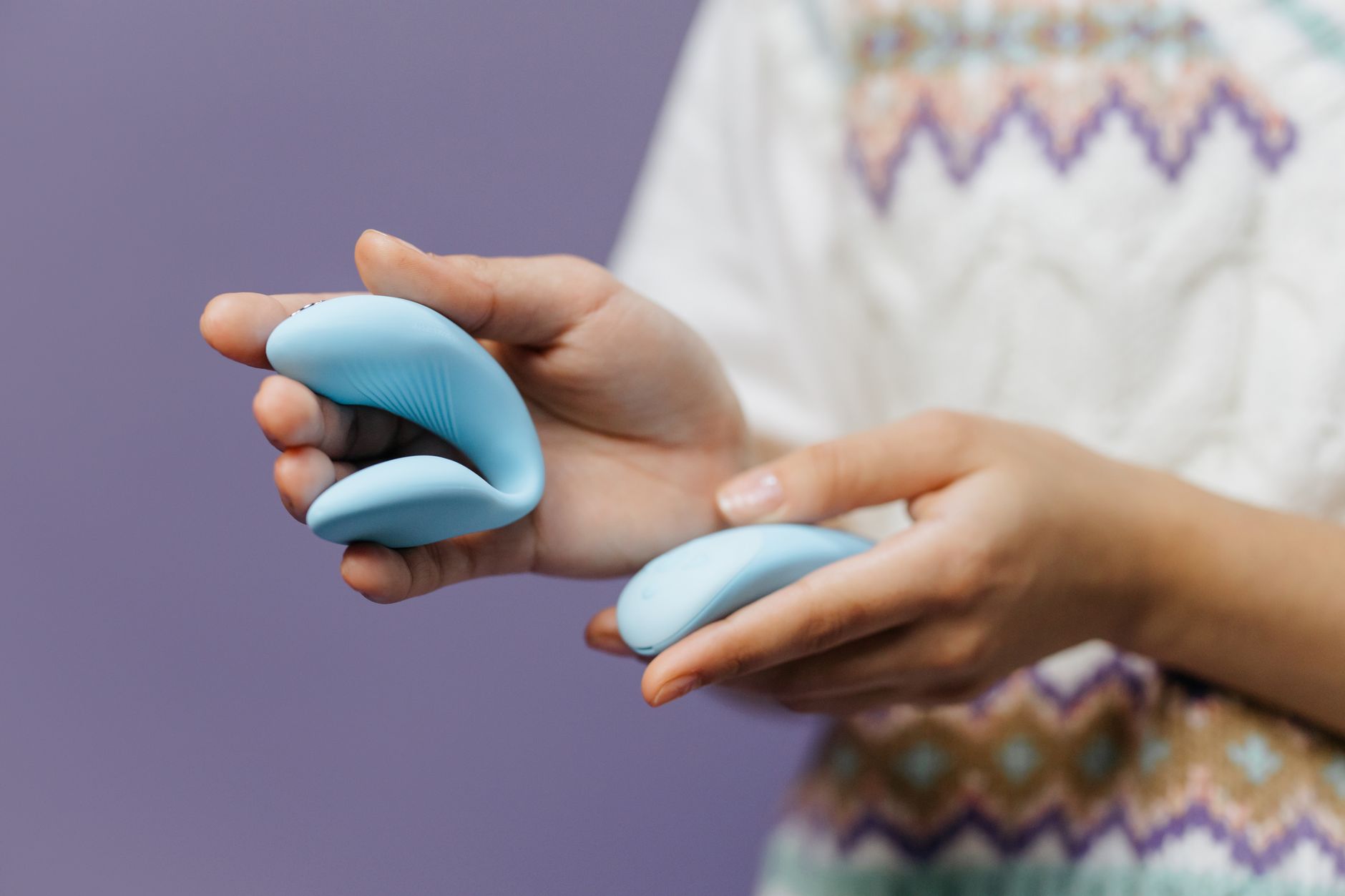
Photo by cottonbro studio on Pexels
The mental game is half the battle
Delayed climax is usually 40% physiology and 60% psychology. The physical fixes only work if you address the head stuff.
Release the "should" timeline. You shouldn't climax in five minutes. Your partner shouldn't expect it. You don't have a quota to hit. When you're used to delayed climax, you're often racing an internal clock while also trying to enjoy something. That's friction. It doesn't work.
Separate pleasure from climax. This is radical but necessary. Your goal for the first week using a lemon vibrator isn't to orgasm. It's to find two minutes of genuine pleasure without judgment or performance pressure. Once pleasure is decoupled from climax, climax often follows naturally.
Solo practice changes everything. You can't learn your own response pattern with a partner watching or waiting. Spend at least a week exploring the lemon vibrator alone. No agenda. No endpoint. Just discovery. This rewires your nervous system's relationship with arousal.
When to bring a partner in
If you have a partner, timing matters. Start your solo practice first. Once you've identified which patterns on the lemon clitoral vibrator work for you, you can guide them. "I want you to hold it at pattern 3 and let me move slightly" gives them concrete direction instead of leaving them guessing.
Partners often make delayed climax worse by changing things. They switch intensities, they move the device, they check in every 30 seconds. Give them a job: hold this position, don't move it, don't talk unless I ask. Sometimes the single biggest shift is giving the person with delayed climax full control. Literally put the Lem in their hand and step back.
The first two weeks
Week one: solo exploration, no climax goal, 15-20 minute sessions, focus on pleasure over outcome.
Week two: identify your pattern (usually emerges by day 5-7), try that same pattern for consistency, start adding it to partnered foreplay if you want.
By week three, most people see a shift. Not always climax, but arousal builds faster, sensation feels sharper, and the frustration loosens.
If nothing's changed by week three, it's time to check for pelvic floor tension with a pelvic floor physical therapist, or to review medication side effects with your doctor. A lemon vibrator is powerful, but it's not a workaround for physical contraindications.
The thing about delayed climax and partners
If your partner is frustrated or impatient about your delayed climax, that's a separate conversation from the physical piece. Your pleasure matters. Your timeline matters. A partner who's more interested in you climaxing quickly than in you feeling good is flagging a larger mismatch. The Lem can't fix that. A conversation can.
Sometimes delayed climax is actually your body's way of saying something else in the relationship needs attention. The vibrator works better when that foundation is solid.
FAQ
Can air-suction lemon vibrators actually help with delayed orgasm?
Yes. Air-pulse technology stimulates different neural pathways than traditional vibration, and that novelty often resets the desensitization cycle. The Lem and other lemon clitoral vibrators work especially well because they require less physical effort to use correctly, which reduces performance anxiety. The key is consistent use of the same pattern for several sessions, not constantly switching intensities or styles.
Is delayed climax my fault or my partner's fault?
Neither. Delayed orgasm is usually a combination of nervous system adaptation, pelvic floor tension, medication side effects, or mental load. Blame is counterproductive. Focus on the root cause. If it's physiological, a lemon vibrator or pelvic floor work helps. If it's psychological, that's a separate conversation and often worth having with a therapist.
How long does it take to see results with a lemon vibrator?
Most people notice a shift in sensation within 1-2 sessions and begin building arousal faster within 2-3 weeks. Full climax sometimes takes longer, especially if delayed climax has been happening for years. Consistency matters more than duration. Fifteen minutes daily is better than an hour once a week.
Should I use a lemon vibrator solo or with a partner for delayed climax?
Start solo. Solo practice removes performance pressure and lets you discover your own response without anyone watching or waiting. Once you know your pattern, you can bring a partner in and give them specific instructions. Many people find delayed climax gets worse when a partner is trying to help without direction.
What if a lemon vibrator doesn't help after a month?
Check three things. First, pelvic floor tension. See a pelvic floor physical therapist. Second, medication side effects. Discuss your prescriptions with your doctor. Third, mental load. Are you stressed, distracted, or in conflict with your partner? No vibrator fixes those. Address the root cause parallel to the physical tools.
Can you orgasm faster if you use a lemon vibrator constantly?
Constant use of the same device can actually create the same adaptation your nervous system already experienced with manual stimulation. Variety helps, but consistency during the initial 2-3 week retraining phase is more important. Once climax comes reliably, rotating in other tools prevents re-adaptation.
The bottom line
Delayed climax feels like a personal problem, but it's almost always a strategy problem. Your nervous system isn't broken. It's bored, tense, distracted, or underestimated. A lemon vibrator addresses the boredom and overload piece. The rest requires you to slow down, pay attention, and give your body permission to respond on its own timeline.
Your pleasure matters. And it's worth the work to reclaim it.
Ready to explore what works for you? Start with solo practice, focus on pleasure over outcome, and give your nervous system time to reset. If you have questions about your specific situation, reach out to us at Hello Nency. We're here to help.