
How to Use a Lemon Vibrator During Perimenopause With Irregular Cycles
Perimenopause is the decade nobody prepared you for. Your cycle disappears for three months, then shows up heavy. Your skin flushes. You want to rip your partner's clothes off at 2 a.m., and the next week you can't imagine being touched. Your body feels like it's being operated by someone else with a very different instruction manual.
Pleasure doesn't pause during perimenopause. But the way you access it does shift. Lemon clitoral vibrators, particularly suction-based designs, work brilliantly through the perimenopausal transition because they're adaptable. They don't demand the same sustained arousal that wand vibrators do. They work with your body's new rhythm instead of against it.
I've worked with hundreds of people navigating this transition, and the ones who maintain consistent pleasure aren't the ones ignoring the changes. They're the ones who get curious about their body's new needs.
What's actually happening to your arousal during perimenopause
Let's separate the biology from the story you're telling yourself. Perimenopause is roughly ten years of wildly fluctuating estrogen and progesterone. Some months, your hormones are still in their typical rhythm. Other months, they're plummeting. Your brain is adjusting to a body that's sending contradictory signals.
This creates three observable patterns in arousal and sensation:
The sensitivity roller coaster. One week, direct touch to your clitoris feels too intense. Two weeks later, that same touch barely registers. This isn't dysfunction. It's your body's response to estrogen levels shifting. When estrogen is dropping, tissue thins slightly, nerve endings cluster differently, and light touch becomes irritating before it becomes pleasurable.
The spontaneous desire cliff. You might have had a cycle where desire was predictable. High before ovulation, lower before your period. During perimenopause, that architecture collapses. Desire can spike randomly or vanish for weeks. You can't plan around it because it's not following a plan.
The warm-up tax. Blood flow to your genitals slows slightly during certain phases of perimenopause. Arousal takes longer to build. That fifteen-minute session that used to work now needs twenty-five minutes of foreplay before you're actually ready.
The lemon vibrator, particularly the Lem's suction mechanism, addresses all three because it doesn't require your body to do anything. You don't have to build arousal to a certain threshold before the sensation lands. The suction engages nerve clusters directly.
Tracking your cycles (and your pleasure patterns) during the transition
Here's where most people get stuck: they stop tracking during perimenopause because the cycles are irregular, so they assume tracking is pointless. The opposite is true. Irregular cycles are exactly when tracking becomes useful.
For three months, keep a simple log. Track two things: (1) when you bleed or spot, and (2) your arousal level each day on a scale of 1 to 10. You're not looking for perfect patterns. You're looking for rough clusters.
Most people discover they have a 2-3 week window where desire is consistently higher, even if that window moves around the calendar. That's your signal to reach for the Lem during those phases and potentially use lower-intensity options during the flat weeks.
The second pattern you'll notice: there are days when direct clitoral stimulation feels raw, and days when you crave intensity. A lemon suction vibrator is genius here because you can start on the gentlest setting and gradually increase, giving your body the option to say no without losing momentum.
How to adjust your lemon vibrator use through different perimenopause phases
Think of perimenopause as three phases, even though they're not perfectly sequential.
Phase one: High-fluctuation months. Your cycle still shows up, but it's erratic. Some cycles are normal length. Others stretch to six weeks. You have periods where your desire is there one minute and gone the next.
With a Lem during this phase, start with pattern one (the gentlest suction setting) and spend three to five minutes just exploring. You're not going for an orgasm. You're mapping where your sensitivity lives that day. If you want more intensity, build up to patterns two or three over time. Never jump to intensity four or five during high-fluctuation phases unless you've tested it previously and know it feels good.
The lemon suction toy works because the patterns are programmable and reversible. If you hit pattern four and realize it's too much, you can dial back immediately. Wand vibrators don't offer that flexibility.
Phase two: Spotting and skipping. Your cycle thins out. You spot for a few days, then nothing for weeks. During this phase, hormone levels are genuinely unpredictable day-to-day.
This is when lemon adult toys shine for self-exploration. Use your Lem for solo sessions where you're not trying to hit an orgasm with a partner. You're getting to know your body's new normal. You might discover that what felt good last month now feels uncomfortable, or vice versa. That information is valuable.
Many people find that during spotting weeks, arousal actually increases because progesterone has dropped but estrogen hasn't fully crashed yet. This is your high-desire window. This is when you reach for the vibrator and give yourself the time and space to explore.
Phase three: Pre-menopause clarity. Cycles have stopped for several months or longer. Hormone levels are finally stable, even though they're at a new baseline. This is often when people report the most satisfying sexual experiences.
Why? The uncertainty is over. Your body has settled. You know your new arousal patterns because you've lived through them. A lemon vibrator during this phase often feels more responsive because you're no longer negotiating with a chaotic endocrine system.
Tissue sensitivity and why suction changes everything
During perimenopause, your vaginal tissue is thinning slightly. This isn't permanent, and it's completely normal. The issue is that traditional vibrators, particularly wands, can feel like they're dragging or creating friction on thinner tissue. It's not painful, but it's less comfortable than it used to be.
Suction-based vibrators like the Lem work differently. They're not relying on friction. They're using gentle suction to stimulate nerve clusters. This means two things: (1) you need less pressure to feel sensation, and (2) you're not creating irritation on delicate tissue.
If you're coming from wand vibrators and transitioning to a lemon clitoral vibrator, expect that the intensity you're used to from a wand is probably overkill now. You might have loved intensity level eight on your old wand. On the Lem, you might find patterns two through four are your sweet spot. This isn't a downgrade. It's your body telling you it needs a different kind of stimulation.
Water-based lubricant becomes non-negotiable during perimenopause. Not because you're broken, but because your tissue appreciates the buffer. The Lem works brilliantly with lube because the suction grips regardless of lubrication level.
Managing desire drops and reconnecting when arousal feels absent
There will be weeks where you don't want the lemon vibrator. You don't want any touch. You don't want to think about pleasure. This is normal during perimenopause.
The trap is treating desire absence as a signal to stop trying. It's not. It's a signal to lower the stakes. Instead of reaching for the Lem expecting an orgasm, use it for twenty minutes with zero expectation. You're not working toward anything. You're giving your nervous system permission to remember what sensation feels like.
Many people find that when they release the pressure to orgasm, arousal returns naturally. The Lem is useful for this because its patterns are meditative. You can use it while reading or listening to music, detached from any outcome.
If desire stays absent for more than a month, it's worth checking in with your doctor. Desire loss during perimenopause is usually hormonal, but it can also be a signal of low thyroid function, depression, or other treatable conditions.
Partnered pleasure through the perimenopausal transition
If you have a partner, perimenopause changes the conversation. Your partner might still want sex on the same schedule. Your arousal is now a moving target. This creates friction.
The most helpful approach: use the Lem solo first. Get to know your new arousal patterns without the pressure of performing or accommodating someone else's timeline. Then, bring what you learn into partnered sex.
You might discover that foreplay needs to be longer. You might find that certain patterns of touch now feel too intense or not intense enough. Share that information directly. "I need more warm-up time" or "Direct touch feels raw this week. Let's use the vibrator instead" aren't rejections. They're data.
Many people find that their partner gets more comfortable with toys like the Lem during this phase because they solve a real problem. If your partner understands that the Lem helps you access pleasure more reliably during the transition, it becomes a tool for both of you, not a replacement for your partner.
When to reach for your lemon vibrator versus when to step back
Not every day calls for a vibrator. The goal during perimenopause is sustainable pleasure, not maximum intensity.
Reach for your Lem when: you have time and space to explore, your body feels open to sensation, you're curious rather than desperate. You're in a phase where arousal is higher. You want to reconnect with your body after weeks of not wanting touch.
Step back when: you're forcing pleasure out of habit or obligation. Your tissue genuinely feels raw or irritated (this is rare, but it happens). You're using the vibrator to bypass real intimacy or communication issues with a partner. You're in a medication change or acute stress period where your nervous system is genuinely depleted.
During perimenopause, your body will tell you what it needs if you listen. The Lem is a brilliant tool for adaptation, but it's not a fix for every shift in desire.
Frequently asked questions about lemon vibrators and perimenopause
Will my desire eventually come back to normal after perimenopause?
Yes, but it will be a different normal. After perimenopause, most people experience stabilized desire at a new baseline. For some, that baseline is higher than before. For others, it's lower. The variability disappears, which many people find genuinely liberating. You can plan around it. Your body stops throwing surprises at you every two weeks. That's actually a win.
Can I use a lemon clitoral vibrator if I'm having hot flashes and my body feels overheated?
Absolutely. Interestingly, some people find that using a vibrator during a hot flash actually helps regulate temperature faster. Whether that's physiological or psychological doesn't matter. If it works for your body, use it. Some people prefer using the vibrator in cooler rooms during high-heat phases of their cycle. Adapt based on what feels good.
Should I be using a lemon suction toy differently if I'm on hormone replacement therapy?
Not necessarily. HRT can stabilize some of the wildness, but it doesn't eliminate perimenopause entirely for most people. You might find that your arousal patterns are more predictable on HRT, which means you can predict when the Lem will feel best. Track for a few weeks to see if HRT has shifted your patterns. If anything, HRT often makes pleasure more accessible because tissue is better supported and desire is more stable.
Is it normal for lemon vibrators to feel less intense during certain times of my cycle?
Completely normal. You haven't changed. Your tissue sensitivity has. On days when estrogen is lower, your clitoris sits slightly differently, and nerve sensitivity fluctuates. The Lem feels different because your body is different. This is why tracking is valuable. You'll discover which days pattern three feels perfect and which days you prefer pattern one.
Can I use a lemon vibrator if I'm also dealing with vaginal dryness?
Yes, with water-based lubricant. Dryness during perimenopause is real, and it doesn't mean you can't have pleasure. The Lem actually works beautifully with lube because the suction engages regardless of lubrication level. Start with a generous amount of water-based lube, warm it up with your fingers, and let the vibrator do its work. Some people find that using lube consistently during penetration actually increases natural lubrication over time because the nervous system stops bracing against discomfort.
What if I still have a regular cycle but my arousal patterns have shifted?
Your cycle is regular, but your hormones are still fluctuating more than they did in your twenties. This is still perimenopause. The Lem is brilliant here because it lets you explore what your body needs on any given day without requiring you to predict it. You might discover that your high-desire window has moved in your cycle, or that intensity preferences have shifted. Track it for two months and you'll have a roadmap.
The bottom line
Perimenopause is not the end of pleasure. It's a recalibration. Your body's arousal system is rewiring, and that takes curiosity, patience, and tools that adapt with you. A lemon suction vibrator does exactly that. It gives you options. You can dial intensity up or down. You can use it solo to understand your new patterns. You can bring it into partnered sex when desire is inconsistent.
Your pleasure matters during this transition. Not after it. Not when things stabilize. Right now, in the chaos. That's when reaching for the right tool, like a high-quality Lem vibrator, makes the difference between struggling through and actually enjoying your body through one of its biggest transformations.
If you're navigating these shifts and want to talk through what's happening in your body and your relationships during this time, reach out. This transition doesn't have to feel like loss.
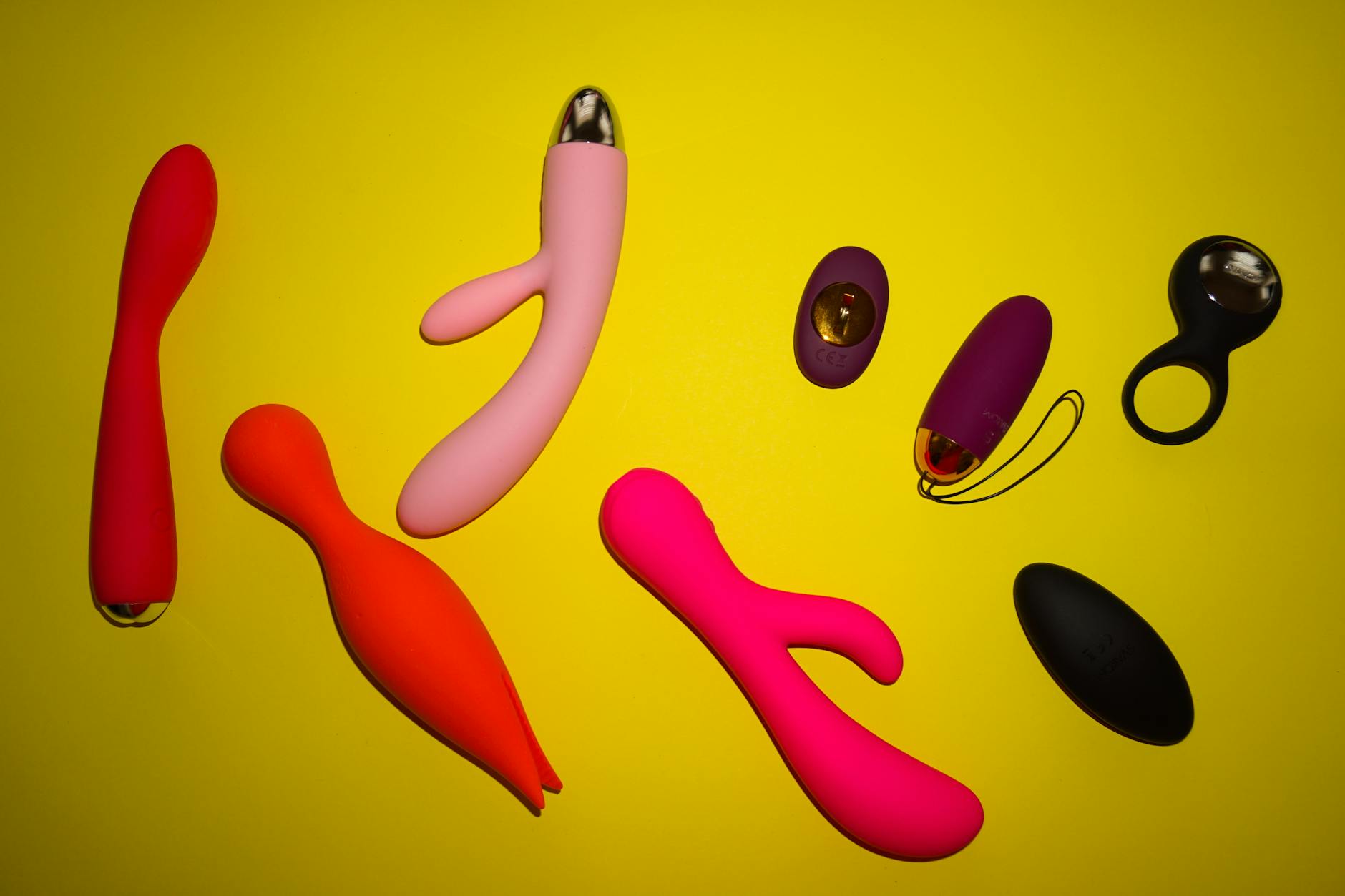
Photo by FounderTips on Pexels