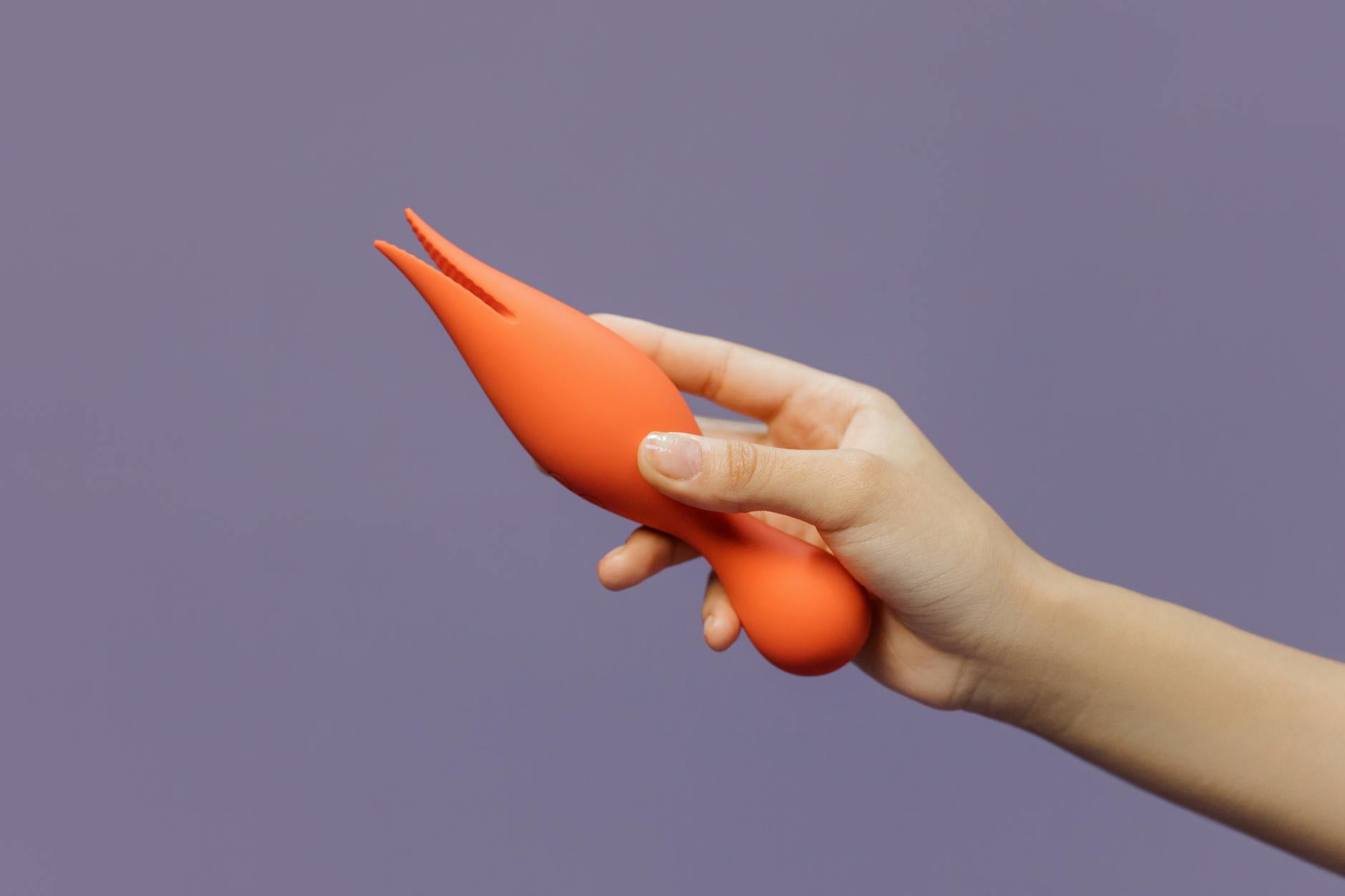
How to Use a Lemon Vibrator When You Have a New Relationship and Want to Explore Together
Here's the thing about new relationships: there's this unspoken pressure to already know what you want, how you want it, and exactly how to ask for it. Then throw a toy into the mix and suddenly the stakes feel higher. Will they think you're too forward? Will it change the dynamic? What if they see it as a criticism of their skills?
These are real concerns. And they're also solvable.
Introducing a lemon clitoral vibrator like the Lem early in a relationship doesn't have to be awkward. It can actually be the thing that builds trust, vulnerability, and genuine connection. I've worked with hundreds of couples navigating this exact moment, and the ones who handle it well share one trait: clarity about their own pleasure, and honesty about wanting to explore it together.
Why the timing matters more than you think
There's a sweet spot for this conversation, and it's not on the first date. It's also not six months in, when assumptions have already calcified.
Ideal timing sits somewhere between "we're consistently sleeping together" and "we're thinking long-term," typically three to eight weeks in. Why? Because you've moved past the performance phase (where everyone is trying to impress), but you haven't yet gotten comfortable enough to avoid the conversation entirely.
If you're earlier than three weeks, the toy becomes theater, a prop in a scene you're both still staging. If you're past two months without mentioning it, introducing it suddenly reads as either criticism ("I need this to be satisfied") or something you've been hiding ("Where did this come from?").
The timing matters because it shapes how the other person receives the information. Introduce it during the natural-exploration phase, when vulnerability is already on the table, and it reads as curiosity. Introduce it later, and it reads as a workaround.
The conversation that actually works
Forget the casual drop or the "surprise" approach. Both backfire. Instead, pick a moment that's intimate but not sexual. Maybe you're lying in bed talking, or sitting on the couch after dinner. This is the opposite of what feels spontaneous, but it's infinitely more honest.
Start with something true: "I've been thinking about exploring pleasure differently, and I'd like to do that with you. I'm interested in trying a clitoral vibrator. I think it could feel really good, and I want you to be part of it."
That's it. No apologies, no caveats about their abilities, no lengthy explanation of why you need it. Just clarity.
What you're doing here is three things at once. One: you're normalizing the toy. Not as a fix or a problem, but as an extension of what you already enjoy together. Two: you're claiming ownership of your pleasure ("I've been thinking", "I want"), which paradoxically makes it less threatening to them. Three: you're explicitly inviting them in ("I want you to be part of it"), which transforms the toy from a solo thing into a shared exploration.
How to handle the pushback (if it comes)
Not everyone says yes immediately. Some people have baggage around toys: they grew up thinking they're shameful, they worry it means they're not enough, they're worried about the mechanics.
If your partner expresses hesitation, resist the urge to convince them. Instead, get curious. "What are you worried about?" is the question that opens doors.
If they're worried they're not enough: "It's not about you. It's about exploring sensation differently together. Your touch and a vibrator do completely different things. I want both."
If they're uncomfortable with the idea in general: "I get that this feels new. Would you be open to just thinking about it? We don't have to decide tonight." Some people need time. Pushing harder usually backfires.
If they want to be involved but need reassurance: "I want you to use it on me. I want to show you what feels good. This is about us exploring together."
The goal isn't to override their hesitation. It's to understand it. And sometimes, understanding takes multiple conversations.
The first time actually using it together
Plan it. I know that sounds unromantic, but spontaneity here usually means someone's uncomfortable and pretending it's fine.
Buy the lemon vibrator before that night. Charge it. Familiarize yourself with it solo first, even for five minutes. You want to know what the patterns feel like, how quiet it actually is, where the power button is. This isn't about getting yourself worked up. It's about reducing variables so the shared experience isn't technical troubleshooting in the dark.
When you're together, start without the toy. Kiss, touch, build arousal the way you normally would. Let your partner initiate sex or foreplay in the usual way. This matters because it removes the sense that the toy is replacing them or taking over.
Then, when you're already aroused, introduce it. "I want to use this now," or "Can you use this on me?" gives agency to both of you.
If they're using it on you, show them what feels good. "A little slower," or "Right there" is information, not criticism. If you're using it on yourself while they're involved (touching you elsewhere, kissing you, being present), that's equally valid.
The lemon clitoral vibrator is quiet and responsive, which helps. You're not managing a loud machine; you're managing sensation.
What happens after the first time
Talk about it the next day, not immediately after. Pillow talk is precious but it's not always clear. A casual conversation hours or a day later, over coffee or while walking, gives you both emotional distance to be honest.
"How did that feel for you?" is the opening. Listen to the answer without defending or explaining. If they loved it, great. If they felt awkward, that's also information. If they're warming up to it, give it time.
Many people who feel weird initially become advocates after a few experiences. The weirdness is unfamiliarity, not a core incompatibility.
Common curveballs and how to navigate them
Sometimes a partner wants to be the one using the toy but feels pressure to perform. "I don't want to mess this up," is code for "I'm self-conscious." Your job here is to reduce stakes. "You can't mess it up. If something doesn't feel right, I'll just adjust it. This is collaborative."
Sometimes introducing the lemon vibrator becomes about other things. If your partner suddenly gets critical about your body, your responsiveness, or other unrelated stuff, that's a yellow flag. A supportive partner celebrates your pleasure, even when toys are involved. If they don't, that's worth examining separately.
Sometimes couples find that the toy actually opens conversations they've been avoiding. You might discover that one person wants more frequency, or different kinds of touch, or more verbal affection. This is good. The toy just catalyzed honesty that was needed anyway. Don't run from it.
Building a shared pleasure practice
After the first few times, the lemon vibrator stops being "the thing we tried" and starts being part of your regular repertoire. It becomes as normal as lube or foreplay.
Some couples use it every time. Some use it occasionally. Some discover that the toy was actually about exploration, and they move on to something else. All of these are fine.
What matters is that you've established a precedent: pleasure is something you explore together, you communicate about it without shame, and you're both invested in it feeling good for both of you. That foundation makes everything else easier. Future conversations about frequency, fantasy, boundaries, or trying new things become natural extensions of what you've already normalized.
The couples I work with who navigate this well aren't the ones who have the "perfect" toy experience. They're the ones who communicated clearly, managed expectations, and treated the whole thing as an adventure rather than a performance.
That's what transforms a lemon clitoral vibrator from a tool into an invitation. An invitation to know each other better. To be vulnerable together. To build something that's genuinely yours.
People also ask
How do I know if my new partner will be open to using a lemon vibrator?
You don't, which is why the conversation comes first. But people tend to be more open than you expect. In my experience, it's less about whether they like toys and more about whether they trust you and feel secure in the relationship. If someone feels genuinely wanted and not compared, they're usually willing to explore. The resistance usually isn't to the toy itself. It's to feeling inadequate. Clarify that the toy is addition, not replacement, and most hesitation dissolves.
Can introducing a vibrator too early ruin a new relationship?
Introducing it honestly and thoughtfully won't ruin anything. Introducing it without conversation, using it as a passive-aggressive statement, or making someone feel pressured can. The difference is communication. I've seen couples who introduced a toy in week three thrive, and couples who wait six months and do it poorly struggle. The timing matters less than the approach. If you're clear, kind, and genuinely inviting them in, you're creating connection, not jeopardizing it.
What if my partner wants to use the lemon vibrator on me but I feel awkward about that?
Talk about it. "I like the idea of exploring this, but I want to build up to you using it on me. Can we start with me using it while you're involved?" is completely valid. Pleasure should never feel like a performance. The whole point of a lemon clitoral vibrator is that it's about sensation, not spectacle. If being watched makes you self-conscious, say so. A partner worth keeping will respect that and work with it.
How do I introduce a toy without making my partner feel like I'm not satisfied with them?
Be explicit about what you want. "I'm satisfied. I want to add something to what we already have." It's the difference between "This isn't working" and "I want to try something new together." People understand addition. They spiral on subtraction. Also, follow through on your words. If you say you want to explore together and then you're always the one using the toy solo, that's a mixed message. Keep them involved. Keep demonstrating that this is shared.
Is there a best position or pattern to use a lemon vibrator with a partner for the first time?
Whatever feels comfortable for both of you. Some couples like you on top so your partner can see what's happening. Some prefer you lying down so you're fully relaxed. Some like the toy to be a background element while your partner is the main focus. The Lem's suction pattern is gentle enough that you can experiment. Start with what feels most intimate and least exposing, then adjust from there. The position matters way less than the comfort level.
Should we use lube with a lemon clitoral vibrator when exploring as a couple?
Yes. Even if you don't need it for arousal, adding lube changes how the toy feels and often makes it feel better. It also signals care. Your partner applying lube before using the vibrator on you is an act of attention that matters. Use water-based lube if your vibrator is silicone. It's a small detail that makes the whole experience feel more intentional.
Introducing toys in new relationships is less fraught than we make it. You're not risking anything that matters by being honest about pleasure. You're actually building the foundation for real intimacy. The couples who do this well—who have these conversations and explore together—develop a level of trust and vulnerability that carries into everything else. That's worth any awkwardness in the initial conversation.
If you want more support navigating relationship transitions, check out our contact page to connect with a coach who specializes in early-relationship communication. We're here to help you build something that actually works.